Follow Smart Money: The Playbook for Copy Trading in Prediction Markets
Copy trading is more than mirroring. Learn how to find traders with real edge and configure setups that preserve it in prediction markets.

0xtomeron
Updated August 22, 2026
Written from first-hand experience by 0xtomeron. AI assisted with editing and formatting; the argument, framework, and examples remain human-led.
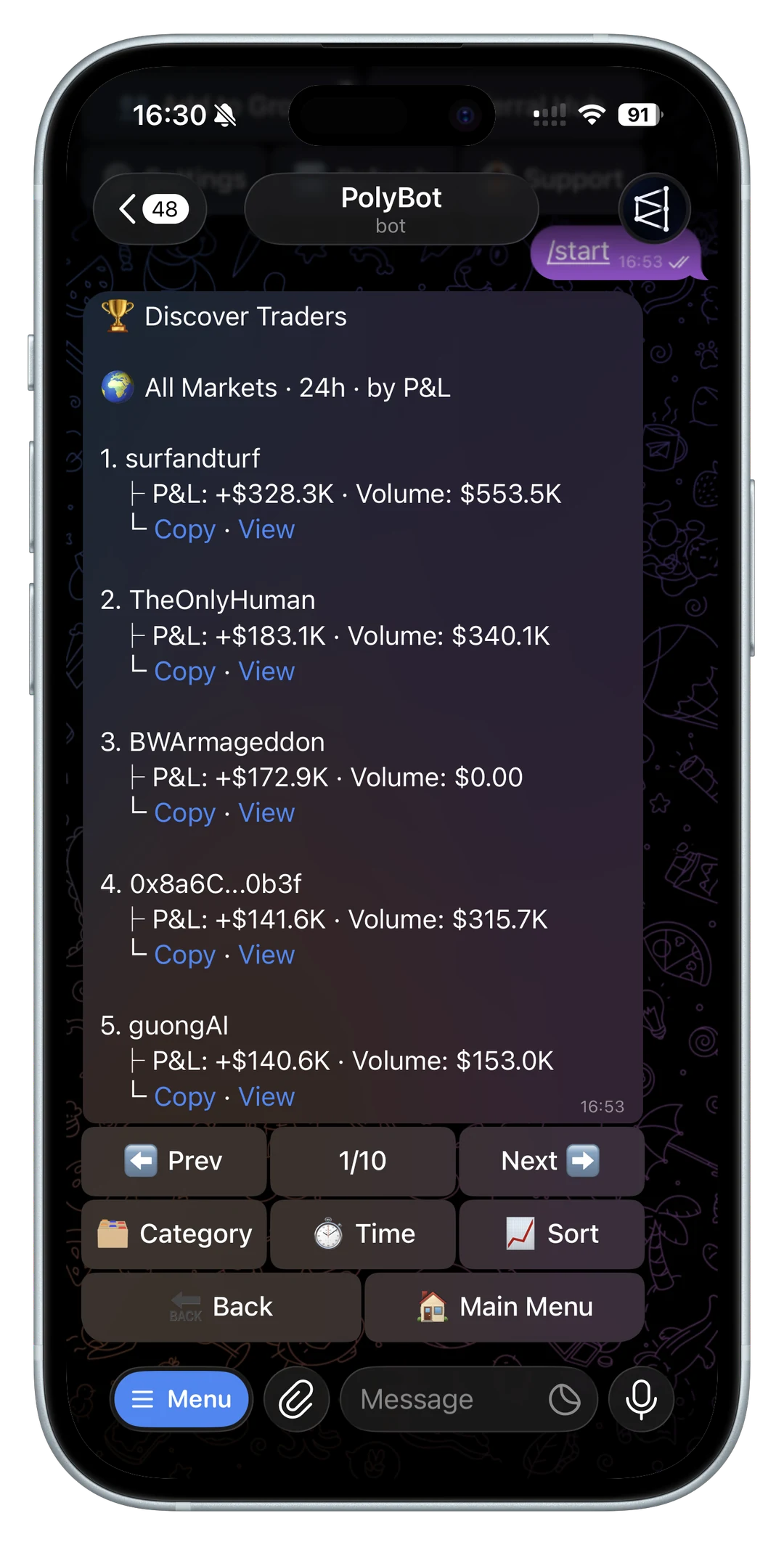
Copy trading is often framed as an easy shortcut: find a winning wallet, copy it automatically, and hope it keeps printing. But strong copy trading setups are not built on hope. They are built on research, monitoring, and constant refinement.
Use the live top Polymarket traders and smart-wallet rankings to build a candidate list around copyability rather than all-time PnL alone. The ranking is the discovery step; the analysis and risk process below determines whether a wallet belongs in an actual setup.
Prediction markets make this especially powerful. Unlike most traditional markets, trades and positions on prediction markets like Polymarket are publicly verifiable on-chain. That means traders can be analyzed based on real behavior rather than claims or vague reputation. You can study how they enter, when they exit, how consistently they perform, which markets they specialize in, and whether their edge seems repeatable. Done properly, copy trading is more than just mirroring trades. It is a way to find real edge on-chain and turn it into a disciplined setup.
How to Find Traders With Real Edge
Finding traders worth analyzing starts with early signals, not final conclusions. At this stage, you are looking for signs that a wallet may have a real edge: strong PnL relative to capital, a solid win rate, repeatable performance over time, and enough activity to make the track record meaningful. But these metrics only matter in context. A low-activity specialist wallet may still be highly valuable, while an active trader with thin margins may be much harder to copy profitably.
The first things to check are:
- PnL relative to deposit size
- Win rate
- Length of track record
- Consistency over time
- Trade frequency
- Specialization by market type
- Whether margins are large enough to remain copyable
The 3 Types of Edge You Can Copy in Prediction Markets
Not every profitable trader is profitable for the same reason. In prediction markets, the strongest traders usually have one of three kinds of edge: expertise edge, strategy edge, or information edge. What matters is not just that a trader made money, but how they made it, because that is what tells you whether the edge is real, repeatable, and worth copying.
Expertise edge
Prediction markets are PvP. That means domain experts often have a real advantage over the average trader. A trader who deeply understands Middle East geopolitics may price those markets better than the crowd. The same applies to traders who specialize in elections, NBA markets, weather events, crypto-specific narratives, or other areas where deep context matters. In these markets, expertise itself can become an edge.
Strategy edge
Some traders are profitable not because they know more about the topic, but because they follow a repeatable strategy that works. On-chain transparency makes those strategies easier to spot. You may find traders who consistently capture arbitrage, react to specific accounts or recurring catalysts, or exploit the same type of setup across similar markets. By studying those wallets closely, you can often identify the logic behind the strategy, estimate the profit margins, and decide whether it is worth copying.
Information edge
Some traders win because they react faster than everyone else. In prediction markets, timing matters, and some wallets repeatedly position before the crowd has fully processed new information. That can come from excellent news monitoring, faster interpretation of developments, or in some cases traders who appear unusually well-positioned ahead of major market moves. Whatever the source, this kind of speed can become a real edge, and copy trading can be one way to benefit from it.
How to Configure a Copy Setup Around That Edge
Once a trader passes your first filters, the question is no longer whether they are worth watching. The question is how to copy them in a way that preserves their edge. That depends on what kind of edge they have. A trader with deep expertise in one area may only be worth copying in those markets. A trader with thin but consistent margins may require strict execution settings. A trader who sizes up only when conviction is high may be better copied only above a certain trade size. Profitable copy trading comes from adapting the setup to the edge, not from treating every trader the same.
To make this practical, here are a few example copy setups for each edge type.
Expertise edge
- Category expert, such as Middle East or NBA markets → keep the setup tightly focused on the markets where the trader's knowledge is strongest. The goal is to isolate the part of the wallet that actually has an edge.
- High-conviction sizing → some expert traders do not just pick the right markets, they also size much bigger when conviction is highest. In those cases, copying only above a size threshold can improve results.
- Weak long-shot trades → even strong traders may take speculative long shots that are less consistent than their core positions. Excluding very cheap markets, such as sub-10c entries, can produce a cleaner setup.
Strategy edge
- Small-margin strategy → keep slippage strict or avoid copying altogether. When profits are narrow, weak execution can erase the edge even if the wallet itself performs well.
- Full-coverage strategy → some strategies only work when the trader's entire set of positions is copied. If your balance is too small to enter all of them, the strategy may lose its structure. In those cases, either fund the setup properly or lower relative sizing so you can still capture the full basket.
- Management-heavy strategy → some traders create edge through how they manage positions after entry, not just through the entry itself. If your copy settings interfere too much with exits or position management, you may end up copying the trade but not the strategy.
Information edge
- Fast-news trader → execution is critical here. When a trader wins by reacting faster than the market, the quality of your copy trading tooling matters directly. A slow system can turn a sharp signal into a weak entry.
- Low-frequency information wallet → some wallets trade rarely, but when they do, the signal may be unusually strong. In those cases, it can make sense to keep the setup active through long quiet periods and use careful alerts rather than treating every quiet period as inactivity.
Now that you know what to look for in a trader, how to understand their edge, and how to shape the copy setup around it, the next step is finding the right tools to analyze them properly.
Useful Tools for Finding and Analyzing Traders
Research is the foundation of a strong copy trading process. Before you copy anyone, you need to know how they perform, what kind of markets they trade, how consistent they are, and whether their edge seems real or temporary. The specific products change, but a useful research stack has three layers:
- Discovery — a leaderboard or smart-wallet list that can filter by time window, market category, activity, and PnL.
- Wallet analysis — address-level history that separates realized results, open exposure, trade frequency, sizing, and category concentration.
- Live monitoring — alerts for new trades and material position changes, used as a prompt to review rather than a command to copy.
The leaderboard and wallet-ranking guide explains how to turn those layers into a shortlist without blindly trusting rank.
Tooling Matters More Than Most People Think
Finding the right trader creates the opportunity. Execution quality, configuration flexibility, and analytics determine how much of that opportunity you actually keep.
Even when two users copy the same wallet, their results can diverge quickly. This becomes especially important when a profitable trader has many copiers or trades in low-liquidity markets. In those situations, staying competitive on entry is critical. A fast system can remain closer to the original trade, while a slower one is more likely to enter after the price has already moved. Over time, that gap can significantly reduce returns.
But speed alone is not enough. Serious copy trading also requires flexibility. You need to be able to shape the setup around the trader rather than copy every move blindly, whether that means whitelisting the market categories where the trader has real expertise, copying only above certain trade sizes, managing slippage more precisely, or using stop-loss to protect the setup when trades go against you.
Then comes visibility. Without analytics, there is no clear way to separate trader quality from execution quality. You cannot see where slippage is hurting, which setups are holding up, or what needs to change. Good analytics turn copy trading from guesswork into an iterative process.
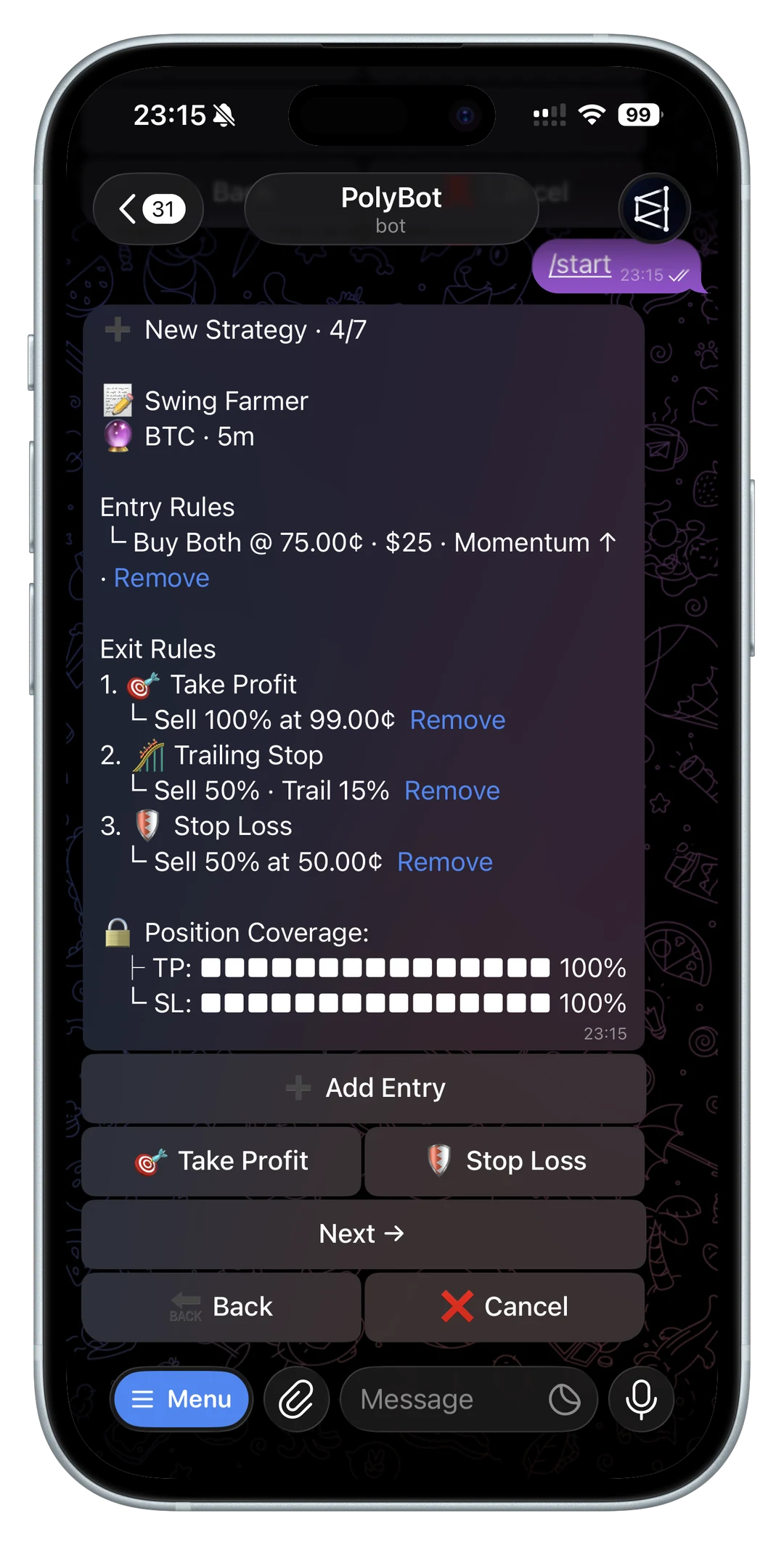
This is why specialized tooling matters. Finding smart money is only the start. You also need the speed, control, and visibility to capture its edge properly. That is where tools like PolyBot become valuable.
Build copy trading as a repeatable process
Prediction markets give you something rare: the ability to see smart money in real time. But the best results do not come from chasing wallets blindly. They come from turning that visibility into a disciplined process: finding real edge, building the right setup around it, and improving it over time.
A practical way to start is with a diversified copy basket. Choose a few traders across niches like sports, geopolitics, or weather, and add a few selective low-frequency wallets on top. Follow them closely, and let the results show you where the strongest setups are. Then lean more into the traders and setups that continue to perform. Over time, that is how a copy setup becomes sharper and better controlled.
Continue the wallet analysis workflow
Start with the PolyBot smart-wallet list, run each candidate through the wallet analyzer, and use the copy trading guide to translate the research into sizing, slippage, and filter rules. If a wallet appears to trade related markets as a basket, do not copy only one leg unless you understand how that changes the risk.
Not investment advice. Public wallet history can be noisy, stale, or hard to copy, and prediction market trading can lose money.
Polymarket Copy Trading: How It Works and How to Start From Telegram
Learn how Polymarket copy trading works, how to choose wallets, configure filters, control slippage, size positions, and manage risk from Telegram with PolyBot.
Copy Trading / 13 min
Polymarket Cuts Crypto Taker Delay From 250ms to 50ms
Polymarket reduced its crypto-market taker delay from 250ms to 50ms. Here is what changed for fills, trading bots, makers, and copy traders.
Execution / 5 min