Why Execution Speed Matters in Prediction Market Copy Trading
Copy trading results aren't just about who you follow. Execution speed, slippage control, and workflow design change prediction-market outcomes.

PolyBot Team
Updated June 1, 2026
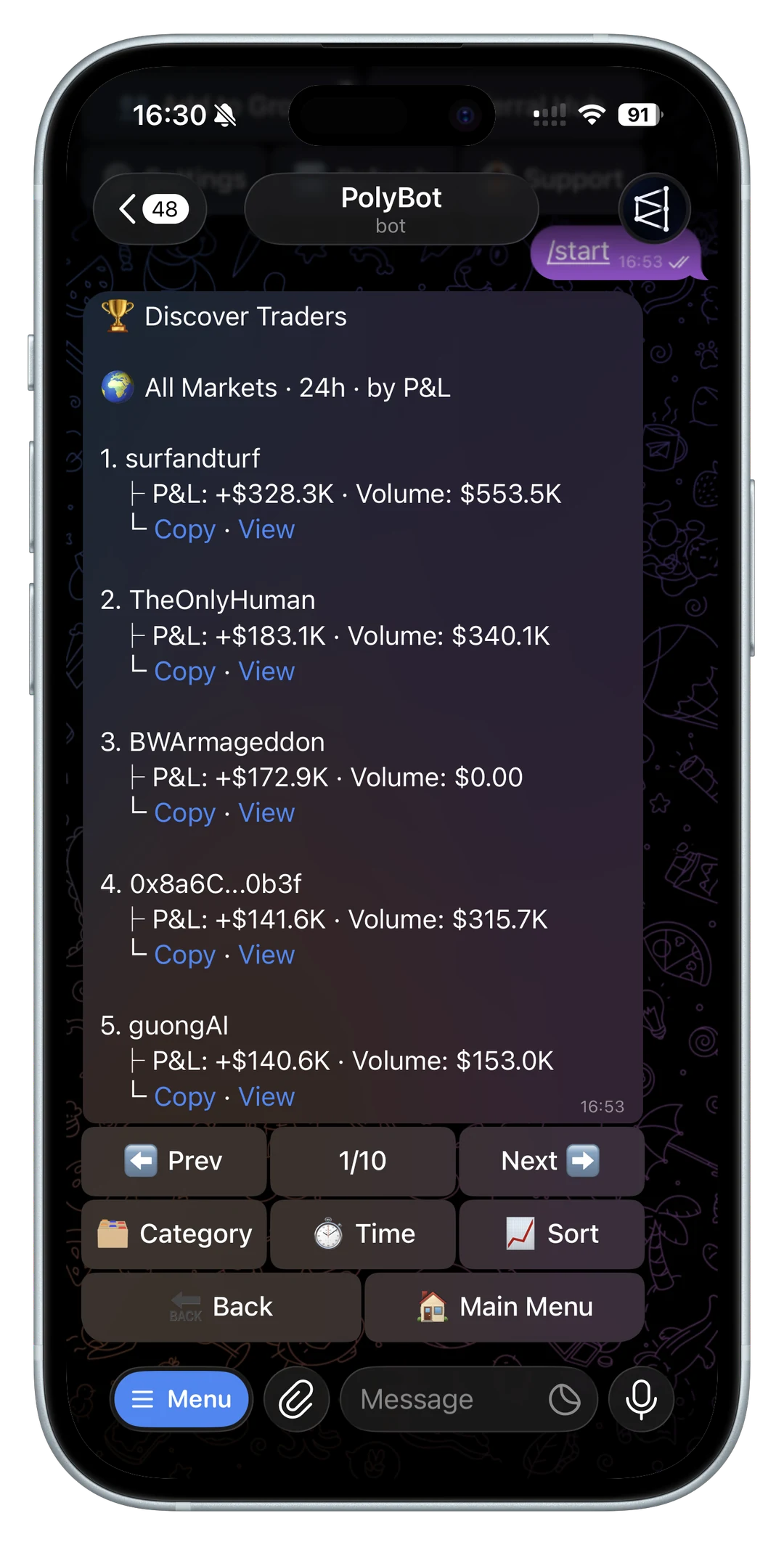
Copy trading is often described as if the only decision that matters is which trader to follow. In practice, that is only the beginning.
In prediction markets, two people can copy the same wallet and end up with very different results. The difference often comes from execution speed, market liquidity, and how the copy setup is configured.
For the wider bot checklist beyond copy-trading speed, read the prediction market trading bot guide.
That makes execution speed an SEO-worthy topic because it answers a real trader question: "Why did I copy the right wallet and still get a worse result?" The answer is usually not one variable. It is the combined effect of source-wallet timing, order-book depth, slippage settings, and the workflow used to place or skip the copied trade.
The core problem
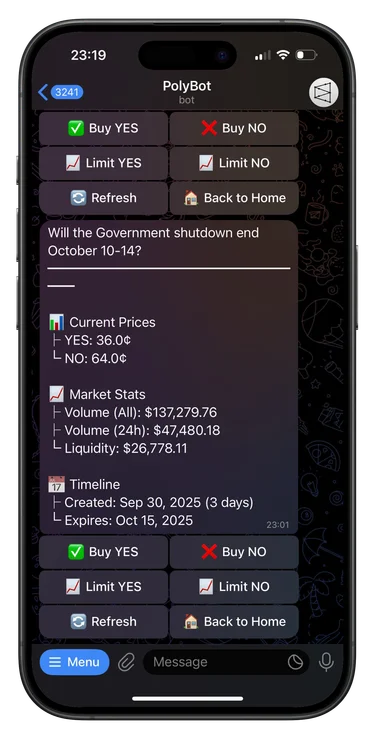
When a wallet enters a market, the quoted price does not stand still just because followers are still reacting. If the trader is active in a low-liquidity market or enters on a fast-moving headline, the first copy can look very different from the tenth.
That means copy trading performance depends on more than trader selection. It also depends on:
- how fast your system can react
- whether you can tolerate the slippage required to get filled
- whether the copied edge survives delayed execution
This is why a copied trade should be reviewed as an execution event, not only as a wallet event. The source wallet may have made a good decision, but the follower still has to enter through the order book that exists after the source trade has already happened.
Which traders are most sensitive to execution speed?
Execution speed matters most when the trader's edge depends on timing.
Examples include:
- wallets that react quickly to breaking news
- traders who buy thin markets before they reprice
- small-margin strategies where late entry destroys the setup
In those cases, speed is not a nice-to-have. It is part of the edge itself.
By contrast, some traders rely more on domain expertise or position management over time. Those setups can still be sensitive to execution, but the pressure is usually lower than it is for fast-news or thin-margin strategies.
Latency and slippage move together
Execution delay matters because price and available size can change between the original trade and the copied trade. That delay can create three different outcomes:
- the copied order fills close to the original entry
- the copied order fills, but at a worse price
- the copied order is skipped because the setup no longer fits the rule
The second outcome is the most dangerous because it can look successful at the order level while weakening the strategy. You got the position, but not the same trade. For copy trading, a worse entry price reduces upside, changes the exit threshold, and can turn a good source-wallet trade into a weak follower trade.
The Polymarket liquidity, spreads, and slippage guide explains the order-book side of this problem in more detail.
Measure the follower gap
To decide whether execution is helping or hurting, track the gap between the source wallet and the follower account.
Useful measurements include:
- source wallet entry price
- copied entry price
- time between source trade and copied attempt
- filled size versus requested copied size
- skipped trades and skip reasons
- market category for each copied trade
- spread width when the copied trade was attempted
The goal is not to make every copied trade identical. That is unrealistic in a live order book. The goal is to learn whether the copied account is consistently close enough to the source wallet for the strategy to remain worth running.
If the follower gap is small in liquid markets but large in thin markets, adjust category filters or size. If the gap is large only around breaking news, the wallet may be too timing-sensitive for your setup. If many trades are skipped, the settings may be protecting you from bad fills rather than "missing opportunities."
For order-level troubleshooting, pair this review with the Polymarket order failed error codes guide. Failed or skipped copied orders are often more informative than successful fills because they show where balance, liquidity, market state, or permissions blocked the workflow.
When faster is not automatically better
Speed improves a copy setup only when the copied trade still has enough liquidity and edge left by the time your order lands.
Faster execution can hurt when:
- the source wallet already consumed the best available price
- several followers are trying to copy the same entry at once
- the market is thin enough that a small order moves the book
- slippage settings are too loose for the leader's expected edge
- the copied account is too large for the market being copied
In those cases, the right answer may be a smaller size, tighter slippage, a limit order workflow, or no copy at all. Speed is a tool for preserving the signal. It is not a substitute for market depth.
This is also why the copy trading bankroll and drawdown guide matters. A setup that works at $10 per copy may fail at $250 per copy if the market cannot absorb the size.
Why Telegram workflows can matter
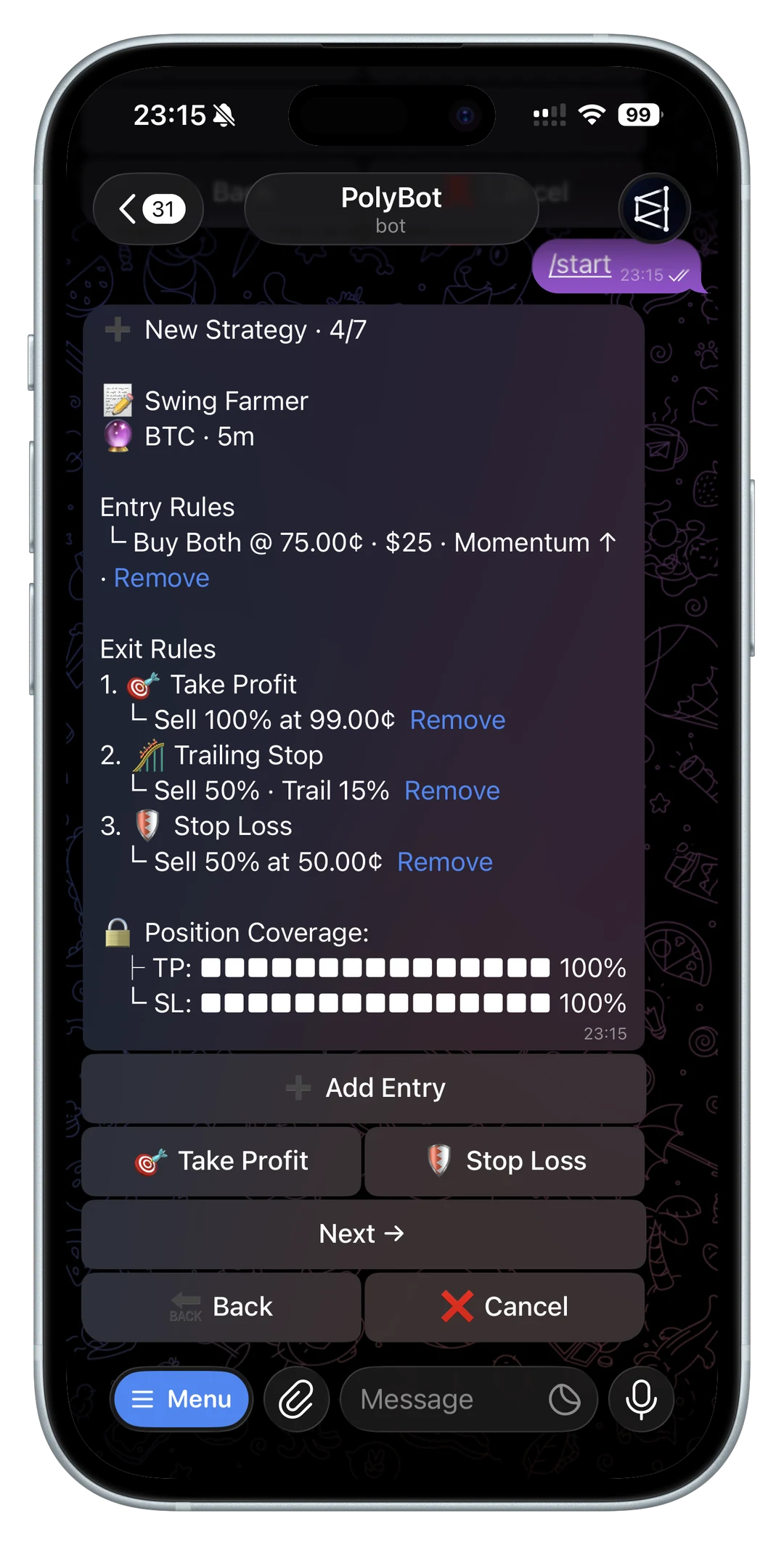
The value of a Telegram-first trading workflow is not just convenience. It is also about reducing friction.
If you can review signals, manage settings, and trigger actions without switching contexts repeatedly, you can often respond more quickly and more consistently. That matters for both manual trading and copy trading.
For traders evaluating a Telegram trading bot for Polymarket, the important question is not simply whether the bot has copy trading. The real question is whether the workflow preserves the edge you are trying to copy.
The workflow should also make review easy after the fact. Portfolio and order history help you compare what you intended to copy with what actually filled. The Polymarket portfolio and orders guide explains why post-trade visibility matters for repeat traders, not just for bookkeeping.
What to watch when you configure copy trading
Good copy trading setups are adapted to the trader being copied. A few examples:
- for thin-margin traders, keep slippage tight or skip the setup entirely
- for conviction-based traders, copy only above certain size thresholds
- for specialist traders, focus on the markets where their edge is strongest
- for fast-news traders, prioritize execution quality and simple settings
That is why analytics and configuration matter so much. Without them, it is hard to tell whether poor results came from the trader, the execution, or the setup itself.
After a week of copied trades, review more than total profit and loss. Compare copied entry prices against the source wallet, look for repeated skips, and note which market categories produce the largest gap. If the same wallet keeps entering markets you cannot copy cleanly, the issue may be copyability rather than the trader's headline skill.
The copy trading settings guide covers the controls that help keep copied entries closer to the intended setup.
A review loop for copied execution
Do not evaluate copied execution from a single trade. Use a review loop:
- Choose one source wallet and one narrow market category.
- Start with conservative copied size.
- Track every copied fill, skip, and failed attempt.
- Compare copied entries against the source wallet's entries.
- Separate liquidity problems from wallet-selection problems.
- Adjust only one setting at a time.
This keeps the analysis honest. If you change size, slippage, category filters, and exit behavior all at once, you cannot tell which change helped.
The how to copy trade on Polymarket from Telegram guide covers the broader wallet-selection workflow. This article focuses on the execution layer after a wallet has already made your shortlist.
Settings that protect execution quality
The most important copy settings for execution quality are usually:
- max slippage
- maximum copied trade size
- minimum source trade size
- per-market exposure cap
- category filters
- alerts for fills, skips, and failed orders
- pause rules after repeated poor fills
These settings should be stricter for thin, fast, or crowded markets. They can be more flexible for slow-moving markets where the source wallet's edge depends less on first-in speed.
Start with max slippage tolerance, then tune size, category filters, and pause rules around the leader's actual fill quality.
The mistake is treating every wallet like the same signal. A fast-news wallet, a domain specialist, and a long-duration position manager need different execution rules.
How PolyBot approaches the problem
PolyBot is designed around fast Telegram-based trading workflows for Polymarket. That matters in copy trading because execution quality and control are a large part of whether a copied edge survives contact with the market.
If you are evaluating PolyBot specifically, start with the Telegram trading bot guide, then read the copy trading playbook. Together they explain both the research side and the execution side of the workflow.
If the strategy depends on constantly updating maker quotes, read the Polymarket market making bot guide before comparing it to normal fast execution.
If you are evaluating fast manual entries from links, alerts, or wallet moves, read the Polymarket sniper bot guide before optimizing only for speed.
For trader selection, use the best Polymarket traders to copy guide as a filter before configuring automation. For exit discipline after a copied position is live, read the stop-loss, take-profit, and trailing stop guide.
If your source wallet came from a rank table, check the Polymarket leaderboard guide before assuming high PnL means the trade is still copyable at your speed.
If skipped copied trades are the recurring symptom, use the Polymarket copy trading skipped trades guide to decide whether speed, slippage, caps, or liquidity is the real constraint.
If the copied wallet trades sports, read the Polymarket sports trading bot guide before relying on speed alone during live games.
Keep copied trades close to the source signal
Copy trading is not only about finding smart money. It is about staying close enough to that smart money for the trade to remain worth copying.
That is why execution speed matters. In prediction markets, timing changes outcomes.
Not investment advice. Speed can improve execution quality, but it does not remove liquidity, slippage, or market risk.
Polymarket Liquidity, Spread, and Slippage in Telegram Trading
Learn how Polymarket liquidity, bid-ask spread, slippage, market orders, limit orders, partial fills, and failed FAK/FOK orders affect Telegram trading and copy trading.
Execution / 11 min
Polymarket Market Orders From Telegram: Fast Buys, Sells, Slippage, and Risk
How to use Polymarket market orders from Telegram: market buys, market sells, bid-ask spread, slippage, FAK/FOK behavior, partial fills, failed orders, and safer review.
Execution / 11 min