Polymarket Order Failed? Error Codes and Fixes for Telegram Bot Traders
A practical guide to Polymarket order failures, CLOB errors, balance and allowance issues, FOK/FAK behavior, delayed matches, and rejects.

PolyBot Team
Updated June 1, 2026
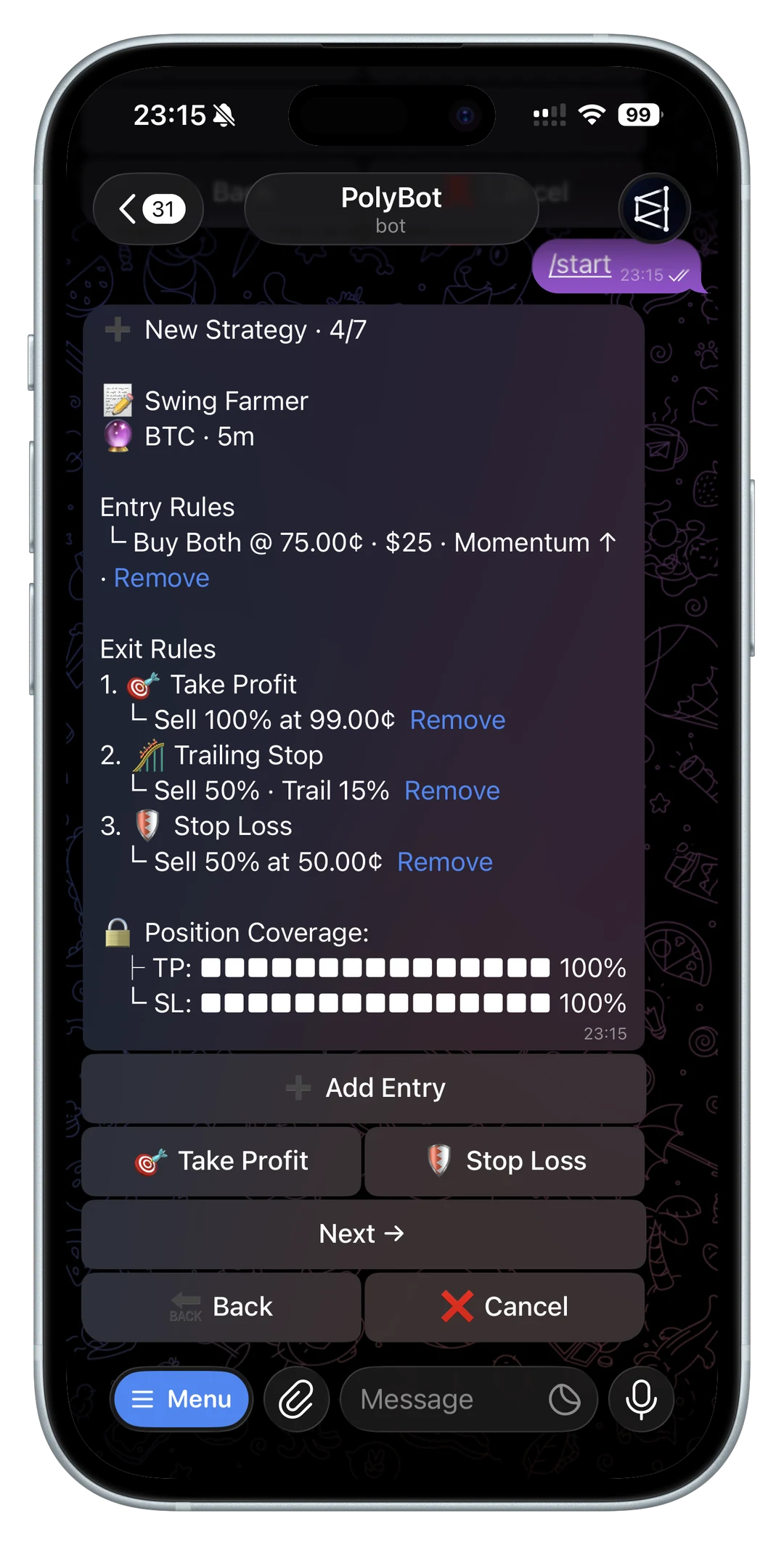
An order failure is not always a bot failure.
Polymarket orders can be rejected because the market is not ready, the price breaks the tick-size rule, the size is too small, the wallet lacks balance or allowance, a post-only order would cross the book, or the order type cannot fill against current liquidity.
This guide translates common Polymarket order errors into trader actions, especially for users placing orders through a Telegram trading bot.
If order failures are arriving as Telegram alerts, use the Polymarket notification bot guide to keep failed orders, partial fills, copied-trade skips, and portfolio reminders in separate review paths.
If any shares filled before the error or reject, use the Polymarket partial fills guide before assuming the account state is unchanged.
If the failed order was an immediate buy or sell, read the Polymarket market orders from Telegram guide before retrying with the same size or slippage. If the failure came from a worst-price or drift limit, review the Polymarket slippage tolerance guide before widening it.
If the failure may involve reserved funds, stale orders, or a cancellation that did not apply to a filled portion, read the Polymarket open orders and cancel orders guide.
If the order did not fail and is simply still resting, use the Polymarket limit order not filled guide before treating a normal open order as an error.
If the failed order came from an AI-assisted strategy, use the Polymarket AI trading bot guide before retrying a model-generated trade with looser limits.
Start with the exact error message
Do not summarize the error too quickly.
"Order failed" is a symptom. The useful information is the exact text or code returned by the trading system. Save the message, market link, side, price, size, order type, and timestamp.
Polymarket's official error code documentation lists CLOB API errors for order placement, order processing, authentication, balances, market data, and rate limits. The exact wording can point to a simple fix, such as reducing size, adjusting price precision, waiting for a market to open, or checking allowance.
If you are seeing these errors while building automation, read the Polymarket API trading bot guide before adding retry logic.
If you are using Telegram, take a screenshot before retrying. Retrying without knowing the cause can create duplicate orders, missed fills, or avoidable confusion.
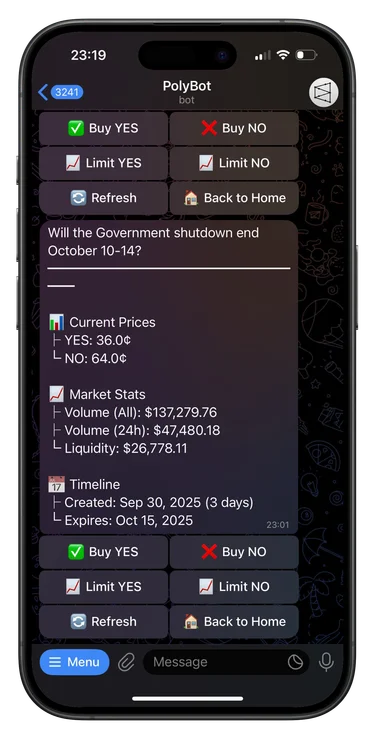
Balance and allowance errors
A common failure is not enough balance or allowance.
For a buy order, the funder needs enough available pUSD or equivalent trading balance for the order. For a sell order, the wallet needs enough conditional tokens and the right allowance. Open orders can also reserve balance, so a wallet may look funded but still have less available for a new order than expected.
Check:
- available balance, not only total balance
- open orders that reserve funds
- whether the trade is a buy or sell
- whether the wallet has approved the relevant contract
- whether recent deposits are fully credited
- whether copy trading limits reserve part of the bankroll
For automated strategies, repeated balance, liquidity, or market-state failures should feed back into settings. The Polymarket Auto Trader bot guide explains the pause-and-review loop.
If the issue started after funding, read fund a Polymarket Telegram bot with USDC and the Polymarket deposit not showing up guide. If the issue started around cash-out, read the Polymarket Telegram bot withdrawal guide.
If the market is part of a negative-risk event, older wallets or contract-specific approvals can make the flow feel different. Read Polymarket negative-risk markets in Telegram before retrying blindly.
Tick size and price precision errors
Some orders fail because the price is not a valid increment for that market.
Polymarket's create order documentation explains that order prices must conform to the market's tick size. A market with a 0.01 tick accepts prices like 0.42 and 0.43, while a market with a 0.001 tick can support finer prices like 0.421.
For the dedicated price-precision workflow, read the Polymarket tick size guide before changing slippage, size, or order type.
If a bot lets you type a custom limit price, this matters. A price that looks reasonable to a human can still be invalid for the market.
When you see a tick-size error:
- check the market's current tick size
- round to a valid increment
- avoid manual decimal edits that create invalid precision
- retry only after confirming the corrected price
For related execution context, read buy, sell, and close Polymarket positions from Telegram.
For portfolio and open-order review after a failed or partial order, read the Polymarket portfolio and orders guide.
If the failed order was a resting price-controlled order, read Polymarket limit orders from Telegram.
Minimum order size errors
An order can also fail because the size is below the market minimum.
This often happens when:
- a user tests with a tiny amount
- a copy-trading percentage creates a small child order
- balance is low after other open orders
- partial exits leave a dust position
- an automated rule sizes down too aggressively
Minimum order rules are especially important for copied trades. A leader wallet may place a normal-sized order, while the follower's percentage-based copy becomes too small to submit. That is not a copy logic issue. It is a sizing issue.
Use the wallet analyzer before copying a trader so your bankroll can support the trader's typical order sizes. A wallet with frequent small, fast trades may be hard to copy with a very small account. The copy trading bankroll and drawdown guide explains how to size copied setups before minimum-order issues appear.
FOK, FAK, and delayed matching
Polymarket's order docs describe GTC and GTD as limit order types, while FOK and FAK are market-style order types that execute immediately against resting liquidity.
FOK means fill-or-kill: the whole order must fill immediately or it is rejected. FAK means fill-and-kill: available liquidity can fill immediately, and the rest is cancelled. If no matching liquidity exists, a FAK order can fail.
For a complete trader-level breakdown, read the Polymarket order types guide.
This matters in fast markets. A Telegram signal may be correct, but the liquidity visible a moment ago may disappear before your order arrives.
For fast manual entries, read the Polymarket sniper bot guide before retrying a failed signal-driven order.
When an FOK or FAK order fails, check:
- current best bid and best ask
- available size at the target price
- spread width
- whether the market just moved
- whether your order size was too large for visible depth
- whether a safer limit order would fit your intent
For related execution context, read how to buy, sell, and close Polymarket positions from Telegram and liquidity, spreads, and slippage.
For fast crypto markets, read the Polymarket crypto trading bot guide before retrying failed up/down orders automatically.
For the book-level reason liquidity can disappear or average fill can worsen, read the Polymarket order book guide.
Crossed-book and post-only errors
A crossed-book error usually means the price would immediately match against the current order book. That may be fine for a taker order, but it is not valid for post-only maker behavior.
If you asked for a post-only order, the system is trying to place an order that rests on the book instead of taking liquidity immediately. If the price crosses the book, it would take liquidity, so the order is rejected.
Fixes include:
- move the price away from the opposite side of the book
- remove post-only behavior if immediate execution is intended
- use a market-style order only when slippage risk is acceptable
- check the book again before resubmitting
This is a normal protection, not necessarily a broken order.
For bots that intentionally use post-only quotes, the Polymarket maker vs taker guide and Polymarket market making bot guide explain why crossed-book rejection is part of maker risk control.
Market not ready and temporary exchange states
Some errors are temporary. A market may not be ready to accept orders, trading may be paused, rate limits may apply, or the exchange may be in a restricted mode.
In those cases, changing your price or size will not fix the root issue. Wait, check official status channels when relevant, and avoid repeated retries that could hit rate limits.
For multi-outcome and negative-risk markets, also make sure you understand the event structure and the exact outcome being traded. The negative-risk markets guide explains what to review before retrying.
If the same message repeats across multiple markets, it is more likely to be a platform or connectivity condition than a single bad market.
How to compare Telegram tools by error clarity
When choosing a tool, do not look only at speed. Use the comparison hub to evaluate whether a bot exposes enough detail when an order fails.
A good trading interface should show:
- order type
- side
- size
- price
- failure reason
- market link
- retry status
- whether funds were reserved
- whether any partial fill happened
Clear errors help users make better decisions. Vague errors encourage panic retries.
If the issue is a copied trade that never executed because settings blocked it, use the Polymarket copy trading skipped trades guide before treating it as an order failure.
Diagnose the failure before retrying
When a Polymarket order fails, capture the exact message first. Then classify it: balance, allowance, tick size, minimum size, order type, crossed book, delayed match, market readiness, or temporary platform state.
Once you know the class of error, the fix is usually straightforward. Adjust the order, wait, fund the account, approve the right allowance, or choose a different execution style.
Not investment advice. Trading involves risk, and execution conditions can change before a retry reaches the market.
How to Sell a Polymarket Position: Market Sells, Limit Sells, Stop Losses, and Redeems
A practical guide to closing Polymarket positions from Telegram: market sells, limit sells, partial exits, stop losses, take profits, open orders, liquidity, PnL, redeeming winners, and withdrawals.
Execution / 10 min
Why Did My Polymarket Limit Order Not Fill? Price, Liquidity, and Open Order Fixes
A practical guide for Polymarket traders whose limit order is still open, partially filled, stale, rejected, or not matching from Telegram.
Execution / 9 min