Polymarket Market Orders From Telegram: Fast Buys, Sells, Slippage, and Risk
How to use Polymarket market orders from Telegram: market buys, market sells, bid-ask spread, slippage, FAK/FOK behavior, partial fills, failed orders, and safer review.

PolyBot Team
Updated June 1, 2026
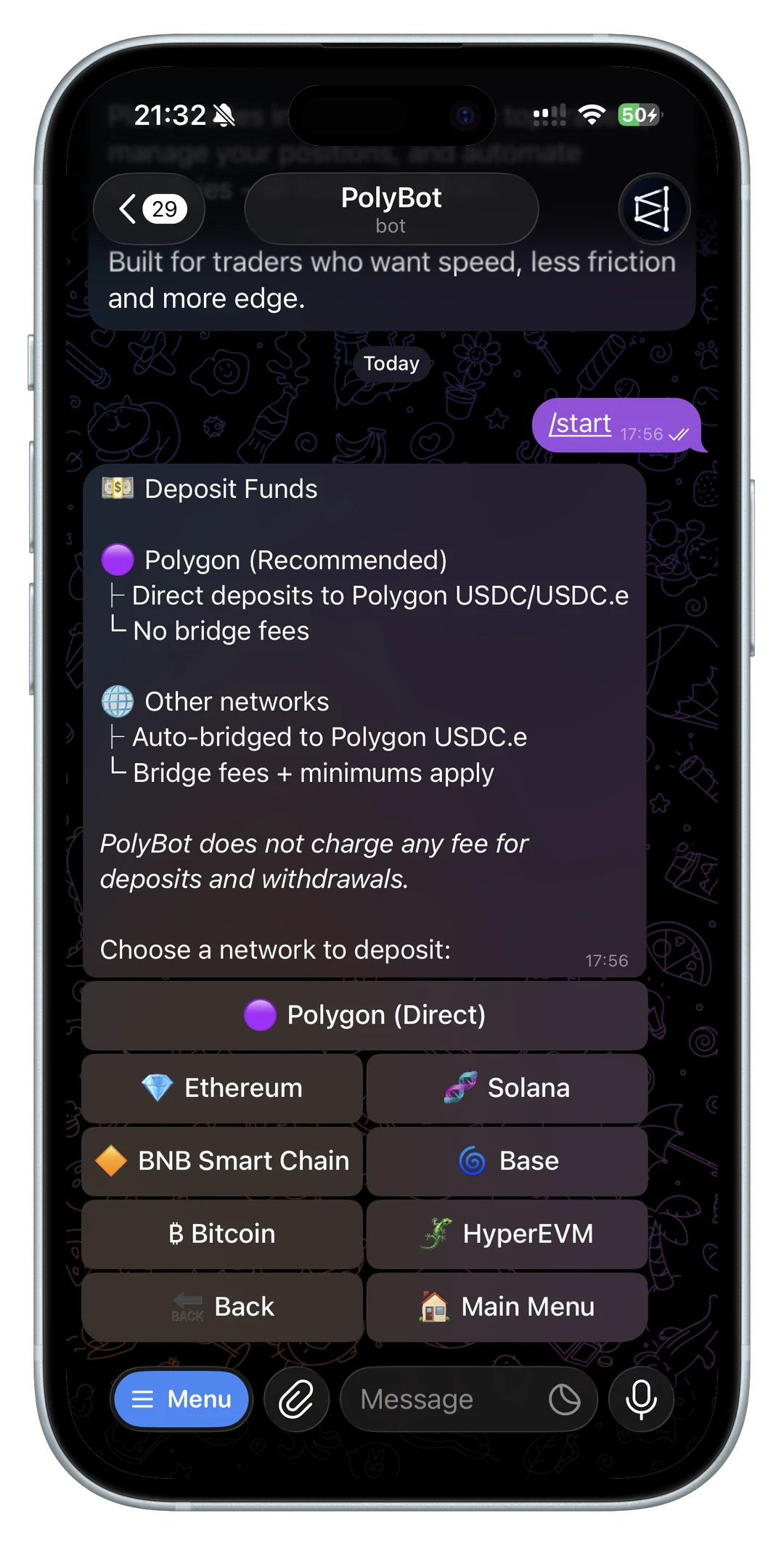
A Polymarket market order is useful when immediate execution matters more than exact price control.
That does not mean it is always the right order. A market buy or market sell interacts with the current order book. The final result depends on available bid and ask depth, spread, slippage controls, order type behavior, and whether the market moves before the order reaches the book. In a Telegram workflow, speed can help, but only if the trader still checks what the order is likely to receive.
This guide explains how to use Polymarket market orders from Telegram: market buys, market sells, bid-ask spread, slippage, FAK and FOK behavior, partial fills, failed orders, copy trading, alerts, portfolio review, and when a limit order is safer.
If you need the broader execution vocabulary first, read the Polymarket order types guide. If your main concern is price discipline, use the Polymarket limit orders guide. If the issue is current executable depth, start with the Polymarket order book guide.
If a limit order has not filled and you are considering switching to market execution, read the Polymarket limit order not filled guide first so the faster order does not hide a price or liquidity problem.
If the order failed before it could rest because the price was invalid, use the Polymarket tick size guide before switching to market execution.
What a market order does
A market order tries to trade immediately against available liquidity.
For a market buy, the order takes available asks.
For a market sell, the order hits available bids.
That is the practical difference between the displayed price and the executable price. A market may look like 52 cents, but if the best ask is 55 cents, an immediate buy is closer to 55 cents. If the best bid is 49 cents, an immediate sell is closer to 49 cents.
Market orders are useful when:
- the spread is tight
- there is enough depth for your size
- the market is moving quickly
- missing the trade is worse than paying a small spread
- you understand the maximum acceptable price movement
- the position size is small enough for current liquidity
They are dangerous when:
- the spread is wide
- the book is thin
- the displayed price is stale
- the trade idea only has a small edge
- the order is much larger than visible depth
- you are reacting to an alert without reviewing the market
The goal is not to avoid market orders. The goal is to use them only when immediacy is worth the execution tradeoff.
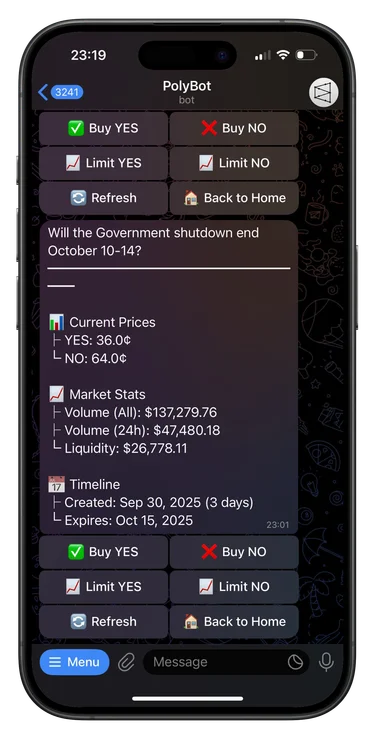
Market order does not mean any price
Traders sometimes hear "market order" and assume the order will blindly pay any price.
In practice, Polymarket market-style behavior still depends on order rules and protection limits. The important trader-level point is simple: a market order prioritizes immediate execution, but the order still interacts with available book depth and configured limits.
You should still know:
- expected buy or sell side
- intended size
- current best bid
- current best ask
- spread
- visible depth near the expected price
- maximum acceptable slippage
- whether a partial fill is acceptable
If you cannot answer those questions, the order is not ready for fast execution.
For slippage and depth mechanics, read the Polymarket liquidity, spread, and slippage guide. For the specific setting decision, use the Polymarket slippage tolerance guide.
If you are comparing immediate execution with resting liquidity, read the Polymarket maker vs taker guide.
Market buys from Telegram
A market buy is the fastest way to enter a position.
In a Telegram trading bot, this often starts from a market card, pasted market link, search result, alert, or copied signal. The user chooses an outcome and amount, then confirms the buy.
Before a market buy, check:
- exact market wording
- outcome side
- current ask
- current spread
- depth at the ask and nearby levels
- expected shares
- slippage setting
- whether the market is moving because of confirmed information
- whether a limit order would preserve the edge better
The key question is:
Would I still want this trade if the fill is worse than the displayed midpoint?
If the answer is no, a market buy may not fit. Use a limit order or alert instead.
Market sells from Telegram
A market sell is the fastest way to reduce or close an active position.
That speed matters when the market is moving against you, a thesis is invalidated, or you want to exit before liquidity disappears. But a market sell depends on bids. If the best bid is weak or shallow, the sell can receive less than the displayed price suggests.
Before a market sell, check:
- shares owned
- current best bid
- bid depth for your size
- spread
- expected exit value
- whether selling all shares would walk through lower bids
- whether a limit sell would fit better
- whether the market has resolved and needs redeeming instead of selling
A market sell closes exposure only if enough bids are available and the order fills the intended size. If only part sells, the remaining shares still need review.
For exit-specific workflow, read how to sell a Polymarket position.
Spread is the price of immediacy
The bid-ask spread is the gap between what buyers are bidding and sellers are asking.
Market orders cross that gap.
If the best bid is 48 cents and the best ask is 53 cents, an immediate buyer usually interacts with the ask side. An immediate seller usually interacts with the bid side. That spread is a cost of speed.
A tight spread can make market orders reasonable. A wide spread should slow you down.
Wide spread does not always mean no trade. It means the market order needs a strong reason. Maybe the news is confirmed and time matters. Maybe the size is small. Maybe the bid and ask are wide but there is still enough depth at the side you need. But you should choose that knowingly.
If the trade edge is only a few cents, crossing a wide spread can erase it.
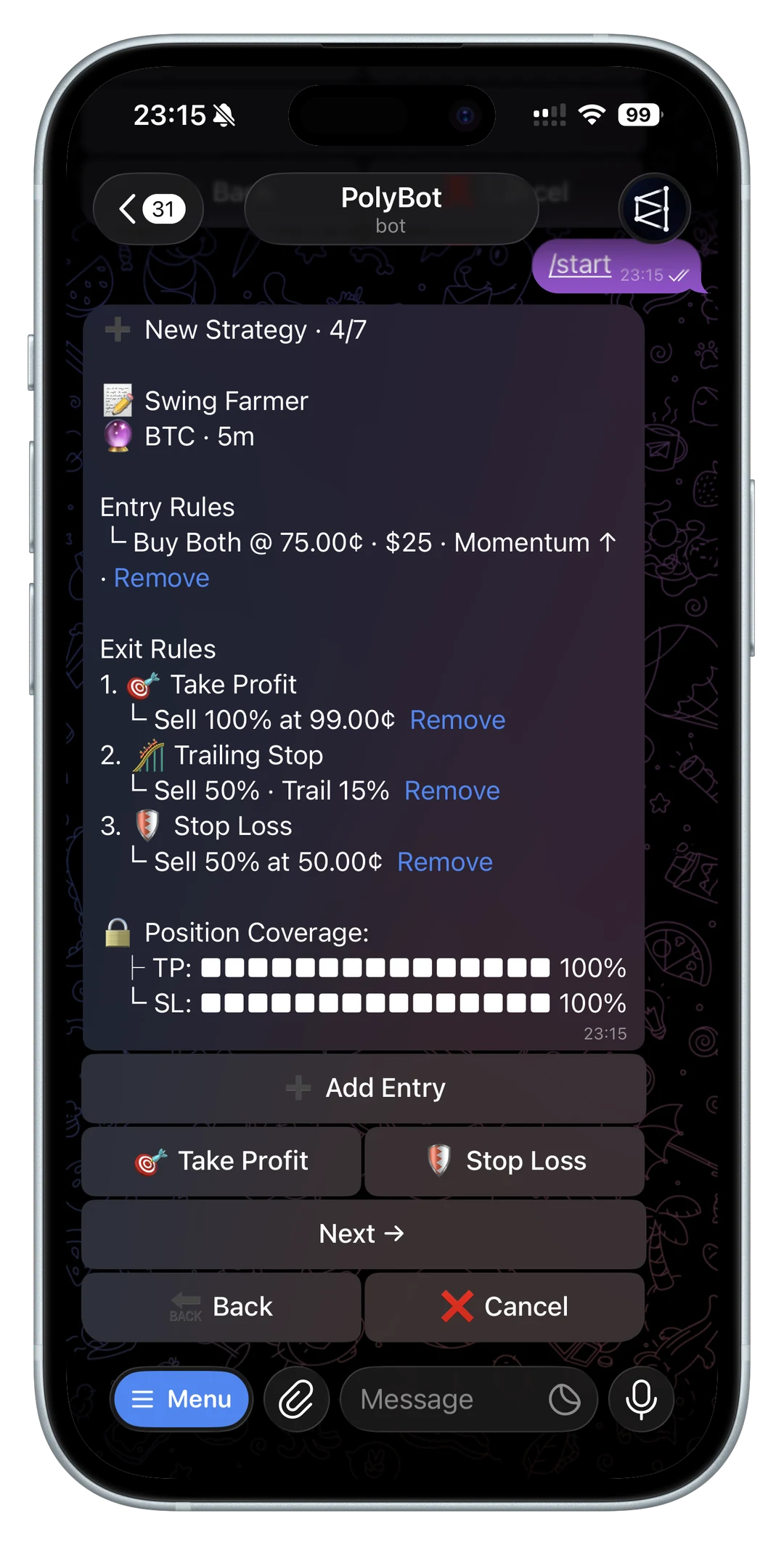
Depth decides whether size is safe
Depth is the available size at each price level.
If you buy more than the best ask size, the order can move into higher ask levels. If you sell more than the best bid size, the order can move into lower bid levels. That is how a market order can fill worse than expected even when the first visible price looked acceptable.
Before increasing size, ask:
- How much size is available at the best price?
- How much is available at nearby levels?
- What average fill price would my size receive?
- Would the order move the market?
- Would a smaller order fit better?
- Would a limit order avoid chasing the book?
Market order size should follow book depth, not only account balance.
For larger trades, the Polymarket partial fills guide explains what happens when only part of the requested order fills.
FAK, FOK, and market-style behavior
Polymarket order docs distinguish market-style behavior through FOK and FAK-style execution.
For trader review:
- FOK means the full order must fill immediately or cancel.
- FAK means available liquidity can fill immediately and the rest cancels.
FOK can protect you from ending with a small partial position, but it can fail more often. FAK can get some exposure without leaving a remainder resting, but it can create a smaller position than planned.
Neither is automatically better. The right behavior depends on the trade:
- Need all size or no trade? FOK-style intent fits.
- Accept some size but no leftover order? FAK-style intent fits.
- Want price control and possible resting execution? Limit order fits.
Use the order type that matches the actual plan, not the fastest button by habit.
Market orders after alerts need extra review
Many rushed market orders start from alerts.
A price alert, volume alert, news alert, whale alert, copied-wallet signal, or group message can bring you back to a market. That does not mean the market is still tradeable at the price that triggered the alert.
Before market buying from an alert, check:
- why the alert fired
- whether the source is confirmed
- whether the market wording matches the source
- whether the price already moved past the useful level
- current bid and ask
- spread
- available depth
- whether a limit order or watchlist update is safer
If the alert gives you attention but not conviction, do not use a market order. Use the Polymarket price alerts guide and Polymarket notification bot guide to keep alerts separate from order instructions.
Market orders and fast execution
Fast execution is useful when a trader already knows the plan.
It is dangerous when speed replaces the plan.
A fast market order can help when:
- the market is liquid
- the spread is tight
- the expected price is still acceptable
- the signal is already verified
- the trade size is small relative to depth
- the trader knows the exit plan
A fast market order can hurt when:
- the market is thin
- the alert is noisy
- the order size is too large
- the trader is reacting to fear of missing out
- the spread widened after the signal
- the market wording was not reviewed
Use the Polymarket sniper bot guide for the broader fast-execution workflow.
Copy trading market orders
Copy trading often depends on fast execution.
If a leader buys a market and your account tries to copy it, the copied order may use market-style execution against whatever liquidity remains. The leader may have consumed part of the book first. Other traders may react too. Your fill can be smaller, later, or worse than the leader's fill.
For copied market orders, review:
- leader fill price
- your fill price
- copied size
- slippage tolerance
- daily cap usage
- whether the order partially filled or skipped
- whether the market still has depth
- whether the copied result still matches the leader's trade
Copy trading should not hide market-order risk. It should expose it clearly.
Use the Polymarket copy trading settings guide and copy trading skipped trades guide when copied market orders fill differently than expected.
Market orders and PnL
Market orders affect PnL through execution price.
A market buy at a worse price raises your average entry. A market sell at a weaker bid lowers the realized exit. A partial market fill can leave both realized and unrealized exposure. A fast order that crosses too much spread may start negative even if the market direction is right.
After a market order, review:
- filled size
- average fill price
- expected price before submit
- spread paid
- slippage versus expectation
- remaining position
- realized or unrealized PnL impact
- whether the order should have been smaller or limited
For account review, use the Polymarket PnL tracker guide and the Polymarket portfolio tracker bot guide.
When a limit order is safer
A limit order is safer when price control matters more than immediate execution.
Use a limit order instead of a market order when:
- spread is wide
- depth is thin
- the market is volatile
- the edge is small
- the target price is known
- missing the trade is acceptable
- you want to sell only above a specific exit level
- the market is reacting to unverified news
- the position size is too large for the current book
The tradeoff is fill certainty. A limit order can miss, rest, partially fill, or become stale. That still may be better than crossing a bad spread immediately.
For detailed price-control workflow, use the Polymarket limit orders from Telegram guide.
Common market-order mistakes
Avoid these mistakes:
- using the displayed midpoint as expected fill price
- ignoring the bid-ask spread
- ignoring depth for the intended size
- retrying a failed market order without checking the book
- market buying from every alert
- selling a large position into weak bids
- using fast mode before understanding slippage
- assuming copied trades fill like leader trades
- treating a partial fill as a full fill
- forgetting that market sells and redeems are different actions
Most mistakes come from treating "market order" as a simple button instead of an execution choice.
A practical market-order workflow
Before submitting a market order from Telegram:
- Confirm the exact market and outcome side.
- Check current bid and ask.
- Check spread.
- Check depth for your size.
- Decide whether slippage is acceptable.
- Decide whether partial fill is acceptable.
- Compare with a limit order.
- Confirm size.
- Submit only if immediacy is worth the cost.
- Review fill price, filled size, and remaining exposure.
This keeps market orders useful without making speed the whole strategy.
Polymarket market orders checklist
Before using a Polymarket market order, answer:
- Am I buying or selling?
- Which outcome side?
- What is the current best bid?
- What is the current best ask?
- How wide is the spread?
- Is there enough depth for my size?
- What is my worst acceptable fill?
- Is partial fill acceptable?
- Would a limit order fit better?
- Did this trade start from an alert, copy, or manual review?
- What do I do if the order fails or fills partly?
- How will I review the position afterward?
If those answers are unclear, slow down before submitting.
Common questions about Polymarket market orders
What is a Polymarket market order?
A Polymarket market order is an order that prioritizes immediate execution against available bids or asks. The final result depends on current liquidity, spread, depth, slippage limits, and order behavior.
Is a market buy the same as buying at the displayed price?
No. A market buy usually interacts with available asks. The displayed midpoint or last price may differ from the price you actually receive.
When should I use a market order?
Use market orders when immediacy matters, the spread is acceptable, and there is enough depth for your size. Use limit orders when price control matters more.
Can market orders partially fill?
Yes, depending on available liquidity and order behavior. If only part fills, review the filled size, remaining exposure, and whether another order still makes sense.
Why did my market order fail?
It may have failed because liquidity disappeared, slippage limits blocked the fill, size was too small, balance or allowance was missing, or the market was not tradeable. Read the Polymarket order failed guide before retrying.
Market orders are tools for urgency
Market orders are not beginner buttons or advanced-only tools. They are urgency tools.
They work best when the trader understands the market, the side, the size, the spread, the book depth, and the risk of a worse fill. They work poorly when used as a reflex after every alert.
Use market orders when speed is worth the cost. Use limit orders, alerts, or no trade when price control matters more.
Not investment advice, legal advice, tax advice, or security advice. Prediction markets are risky, and market orders can fill worse than expected when liquidity, spread, or market state changes.
Polymarket Liquidity, Spread, and Slippage in Telegram Trading
Learn how Polymarket liquidity, bid-ask spread, slippage, market orders, limit orders, partial fills, and failed FAK/FOK orders affect Telegram trading and copy trading.
Execution / 11 min
How to Sell a Polymarket Position: Market Sells, Limit Sells, Stop Losses, and Redeems
A practical guide to closing Polymarket positions from Telegram: market sells, limit sells, partial exits, stop losses, take profits, open orders, liquidity, PnL, redeeming winners, and withdrawals.
Execution / 10 min