Polymarket Copy Trading Skipped Trades Guide: Slippage, Caps, Filters, Balance, and Fixes
Why copied Polymarket trades can skip in a Telegram bot: slippage, daily caps, balance, price filters, category filters, minimum size, no shares to sell, liquidity, and how to review fixes.

PolyBot Team
Updated June 1, 2026
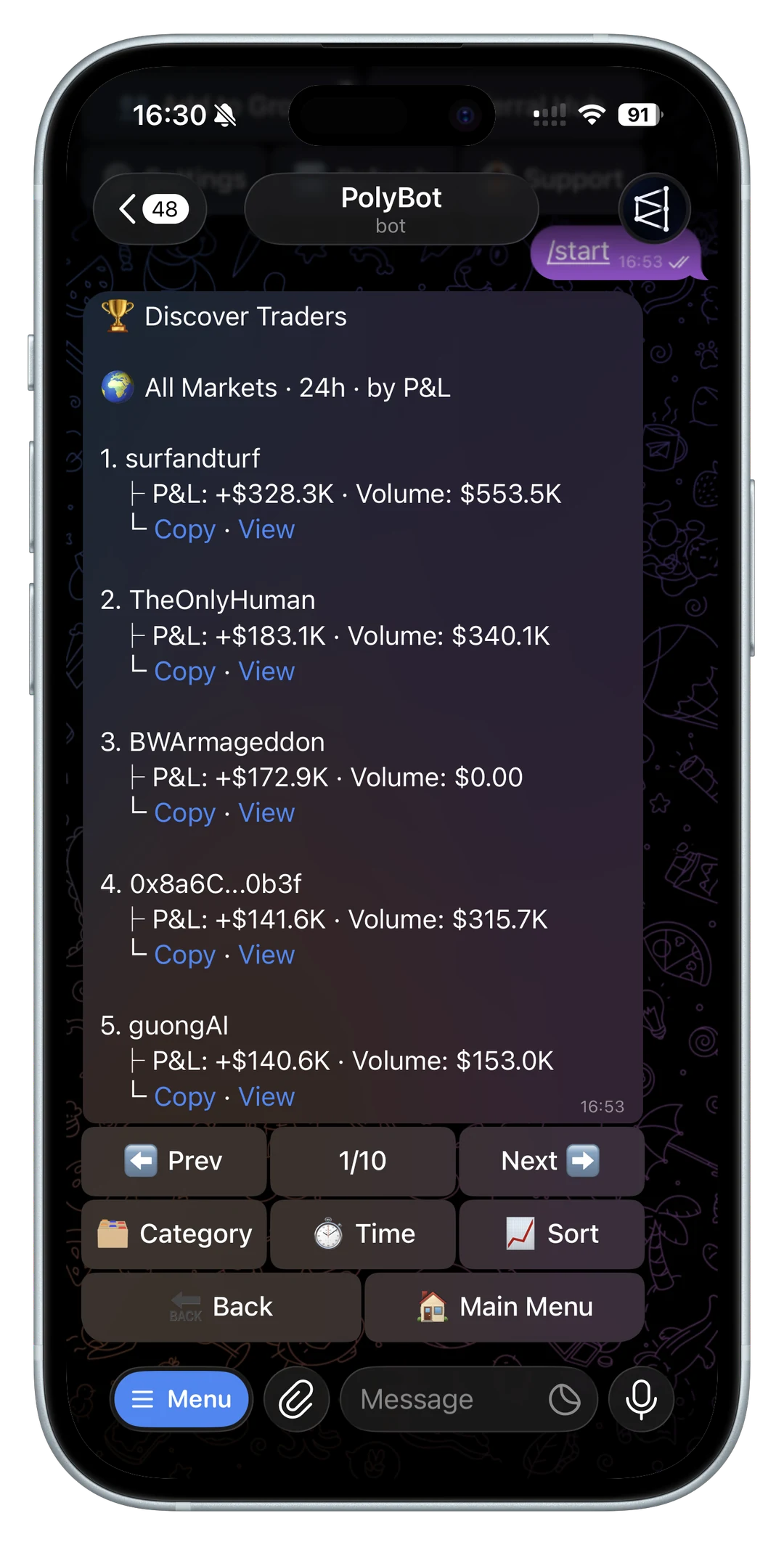
A skipped copied trade is not always a problem. Sometimes it is the setting doing exactly what you asked it to do.
Copy trading on Polymarket has to translate another wallet's action into your own account, bankroll, filters, liquidity, and timing. The leader may buy fast, trade a thin market, use a larger size, enter outside your price range, or sell shares you never copied. If your rules block the copy, the result is a skipped trade.
That can be frustrating, especially when the leader's trade wins. But a skip can also protect you from a bad fill, oversized exposure, wrong category, or trade that no longer matches the leader's price.
This guide explains why Polymarket copied trades can skip in a Telegram bot, how to classify skip reasons, when to loosen settings, when to leave them strict, and how to review whether skipped trades are protecting your setup or blocking the edge you meant to copy.
If you are still configuring the subscription, start with the Polymarket copy trading settings guide. If you are choosing who to follow, use the best Polymarket traders to copy guide and the Polymarket wallet analyzer before changing skip rules.
If skipped, partially filled, or copied trades have already changed account exposure, use the Polymarket portfolio tracker bot guide to check current positions, open orders, PnL, and leader concentration.
If a copied order filled only part of the leader's trade, use the Polymarket partial fills guide before loosening slippage, caps, or size filters.
If a copied limit order remains open instead of matching, use the Polymarket limit order not filled guide to separate leader timing, follower price limits, liquidity, and reserved balance.
If the skip happened because your setup would have taken liquidity at a worse price, use the Polymarket maker vs taker guide before changing execution rules.
Skipped does not mean broken
A copied trade can skip for three broad reasons:
- your settings blocked it
- your account could not support it
- the market could not fill it safely
Those are different problems.
If your settings blocked it, the fix may be changing caps, filters, slippage, or sizing. If your account could not support it, the fix may be available balance, minimum size, or open-order cleanup. If the market could not fill it safely, the skip may be good protection.
Do not judge a skip only by whether the leader's trade later made money. Judge whether your copied version would have been a good trade at your price, size, and risk limits.
Common skip reasons
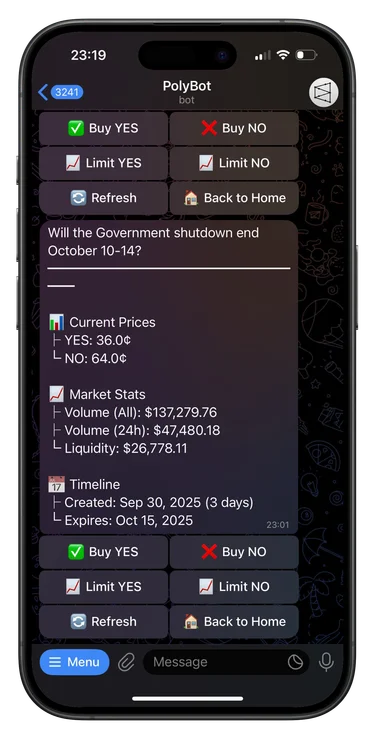
Common copied-trade skip reasons include:
- daily cap reached
- subscription paused
- insufficient tradable balance
- copied amount below minimum order size
- leader trade below your minimum trade-size filter
- copied amount above your maximum trade-size filter
- price outside your allowed range
- slippage too high
- category filtered out
- expiry too far away
- no shares available to sell
- per-outcome limit reached
- market no longer open or tradeable
- liquidity disappeared before the copy order reached the book
The right next step depends on which class applies. Do not loosen every setting at once. Change one rule, then review whether future fills improve.
Slippage skips protect price quality
Slippage is the most important skip reason in fast or thin markets.
If a leader buys YES at 41 cents and your copied order would fill at 48 cents, your trade is not the same trade. Tight slippage can skip that copy instead of accepting a worse price.
That skip may feel bad if the leader wins, but it may still be correct. The leader's edge may depend on the earlier price.
Review:
- leader fill price
- attempted copy price
- current bid and ask
- spread
- visible depth
- time between leader trade and copy attempt
- whether the market moved because of the leader
Loosen slippage only when filled copies still have enough edge after price drift. If worse fills usually erase the trade, keep the skip.
For execution context, read why execution speed matters in prediction market copy trading, Polymarket liquidity, spread, and slippage, and the Polymarket slippage tolerance guide.
Daily caps prevent runaway subscriptions
A daily cap stops one followed wallet from using too much balance in one day.
If a leader is active, a daily cap can skip later trades even if each individual trade looks fine. That is not a bug. It is a circuit breaker.
Before raising a daily cap, check:
- how many trades the leader usually makes per day
- whether the skipped trades were higher quality than the copied trades
- whether one active day could consume too much bankroll
- whether multiple subscriptions can hit the same market
- whether your drawdown limit can handle the higher cap
If the cap is always reached early, either the leader is too active for the allocation or the allocation is too small for the leader's style.
Use the Polymarket copy trading bankroll and drawdown guide before increasing caps.
Balance and open orders can cause skips
A wallet can look funded while still having less available balance than expected.
If the balance issue appears during cash-out rather than copying, use the Polymarket withdrawal failed guide before changing copy settings.
Open limit orders, existing positions, pending withdrawals, strategy entries, and other copy subscriptions can reserve or consume balance. A copied buy may skip because the tradable balance is not enough for that order.
Check:
- available tradable balance
- open limit orders
- active strategy entries
- pending deposits or withdrawals
- other copy subscriptions
- daily caps already used
- market or outcome exposure already open
If the issue started after funding, read the Polymarket Telegram bot deposit guide and Polymarket deposit not showing up guide. If value is locked in open positions or orders, use the Polymarket portfolio and orders guide.
Minimum size skips happen with small balances
Percentage-based copy settings can create orders that are too small.
For example, if a leader buys a modest amount and your proportional multiplier is small, the copied order may fall below the market or product minimum. That skip is not about trader quality. It is a sizing mismatch.
Fixes can include:
- using fixed sizing
- increasing the fixed amount
- increasing proportional multiplier
- skipping leaders with many tiny trades
- choosing wallets with larger, less frequent entries
- increasing bankroll only after the setup has evidence
Do not increase size only to avoid minimums. The copied amount still needs to fit your risk plan.
For sizing controls, read the Polymarket position sizing guide.
If the copied order failed because the follower price had invalid precision, use the Polymarket tick size guide before changing copy-trading caps or slippage.
Price filters can block the right trade for the right reason
Price range filters decide which odds you are willing to copy.
If your range allows only 20 to 80 cents, a leader trade at 93 cents may skip. That may be exactly what you want if you are avoiding low-upside, high-price positions.
Before widening a price filter, ask:
- does the leader actually have edge at this price range?
- does the payout justify the risk?
- is the market near resolution?
- is the trade a hedge or part of a basket?
- would a different outcome or related market be cleaner?
Wide price ranges copy more trades. They also copy more risk types.
Category and expiry filters skip mismatched trades
Category filters stop a subscription from copying markets outside your intended edge.
That matters because many wallets are specialists. A strong sports wallet may be weak in politics. A strong crypto trader may use short-window markets that do not fit your bankroll. A long-dated politics market may tie up capital longer than your copy plan expects.
Expiry filters create a similar boundary. They can skip markets that resolve too far in the future.
Before removing filters, check whether the leader's historical edge exists in the skipped category or timeframe. If not, the skip is likely useful.
For category review, read the Polymarket wallet analyzer guide and the Polymarket leaderboard guide.
Sell skips can mean you never copied the buy
Copied sells are different from copied buys.
A sell can skip because your account does not own the shares the leader is selling. That can happen when:
- the leader bought before you started copying
- the original copied buy skipped
- your copied buy partially filled
- you used buy-only mode
- you manually sold earlier
- the leader sells more shares than you hold
- the position was already closed or redeemed
Do not treat a skipped sell as a simple failure. First check whether your portfolio actually has the outcome and size required for that sell.
For exit workflow, read how to sell a Polymarket position from Telegram.
Liquidity skips can be good protection
Thin markets can make a copied trade impossible at a reasonable price.
The leader may consume the best ask. By the time your copy reaches the market, there may be no matching liquidity left at your allowed price. A skip in that case can protect you from chasing a worse fill.
Check:
- best bid and ask after the leader trade
- spread width
- depth at your copied size
- whether the leader moved the book
- whether the market is fast-moving
- whether a smaller fixed size would have fit
If the market is too thin for your size, the correct fix may be reducing size or skipping the leader, not loosening slippage.
For book mechanics, read the Polymarket order book guide.
Failed order versus skipped copied trade
A skipped copied trade and a failed order are related, but not identical.
A skip usually means your rules or current conditions prevented the copy from becoming a completed trade. A failed order means an attempted order was rejected or could not execute under the order rules.
If an order was actually submitted and failed, capture the exact error message. It may be balance, allowance, tick size, minimum size, FOK/FAK behavior, market readiness, or a temporary exchange condition.
For those cases, use the Polymarket order failed guide and the Polymarket order types guide.
How to review skipped trades
A useful weekly review looks at both fills and skips.
Track:
- total leader trades
- copied fills
- skipped trades
- skip reasons by count
- skipped trades that would have been profitable
- skipped trades that avoided bad fills
- average copied entry versus leader entry
- category of skipped trades
- whether skips cluster around one setting
- whether high-conviction leader trades are being blocked
The goal is not to copy everything. The goal is to understand whether your rules are preserving the leader's edge in a version your account can actually support.
When to loosen settings
Loosen settings slowly when:
- the same high-quality setup is repeatedly skipped
- skipped trades were still attractive at your likely copied price
- the leader's edge survives worse fills
- your bankroll supports higher caps
- the skipped category is part of the leader's proven edge
- your current rules block nearly all useful trades
Change one setting at a time. If you loosen slippage, do not also raise size and daily cap in the same review cycle. You need to know which change affected results.
When to keep skips strict
Keep skips strict when:
- the leader trades thin markets
- price drift is large after leader entries
- skipped trades usually occur after wide spreads
- you do not understand the skipped categories
- the leader averages down aggressively
- your copied fills already trail the leader badly
- daily cap skips are protecting bankroll
- sell skips happen because you never owned the shares
Skipping is part of copy trading. A subscription that copies every trade at any price is usually not safer. It is just less selective.
Skipped copied trade checklist
When a copied trade skips, answer:
- Which leader traded?
- Which market and outcome?
- Was it a buy or sell?
- What was the leader's fill price?
- What would your copied price have been?
- Which setting or condition caused the skip?
- Was your daily cap already used?
- Was your tradable balance enough?
- Was the copied amount above the minimum size?
- Was the market category allowed?
- Did your account own shares for a copied sell?
- Did liquidity still exist at your allowed price?
- Should the setting change, or did the skip protect you?
If the answer is unclear, do not loosen the setup yet.
FAQ
Why was my Polymarket copied trade skipped?
Common reasons include slippage, daily caps, insufficient balance, minimum order size, price filters, category filters, expiry filters, per-outcome limits, no shares to sell, or liquidity disappearing before the copy could fill.
Is a skipped copied trade bad?
Not always. A skipped trade can block a winning opportunity, but it can also protect you from a worse price, oversized exposure, wrong category, or trade that no longer matches the leader's fill.
Should I loosen slippage to copy more trades?
Only if copied fills still have edge at the worse price. Loose slippage can increase fill rate while lowering trade quality. Review leader fill versus copied fill before changing it.
Why did the leader sell but my copy did not?
Your account may not own the same shares. The original buy may have skipped, partially filled, happened before you started copying, or you may be using buy-only mode.
Bottom line
Skipped copied trades are data.
They tell you where your settings, bankroll, timing, and market liquidity differ from the leader's account. Some skips should be fixed. Some skips should be kept. The job is to tell the difference before increasing size.
For the full setup loop, read the Polymarket copy trading settings guide, copy trading bankroll guide, and liquidity, spread, and slippage guide.
Polymarket Copy Trading Settings: Sizing, Slippage, Caps, and Filters
How to configure Polymarket copy trading settings before mirroring a wallet: fixed vs proportional sizing, slippage, daily caps, price filters, category filters, stop losses, skip reasons, and performance review.
Copy Trading / 13 min
Polymarket Copy Trading: How It Works and How to Start From Telegram
Learn how Polymarket copy trading works, how to choose wallets, configure filters, control slippage, size positions, and manage risk from Telegram with PolyBot.
Copy Trading / 13 min