Polymarket Partial Fills Guide: FAK, FOK, Limit Orders, Liquidity, and Telegram Review
How Polymarket partial fills happen, why FAK and limit orders can leave smaller positions, how to review liquidity, open orders, copied trades, PnL, and risk from Telegram.

PolyBot Team
Updated June 1, 2026
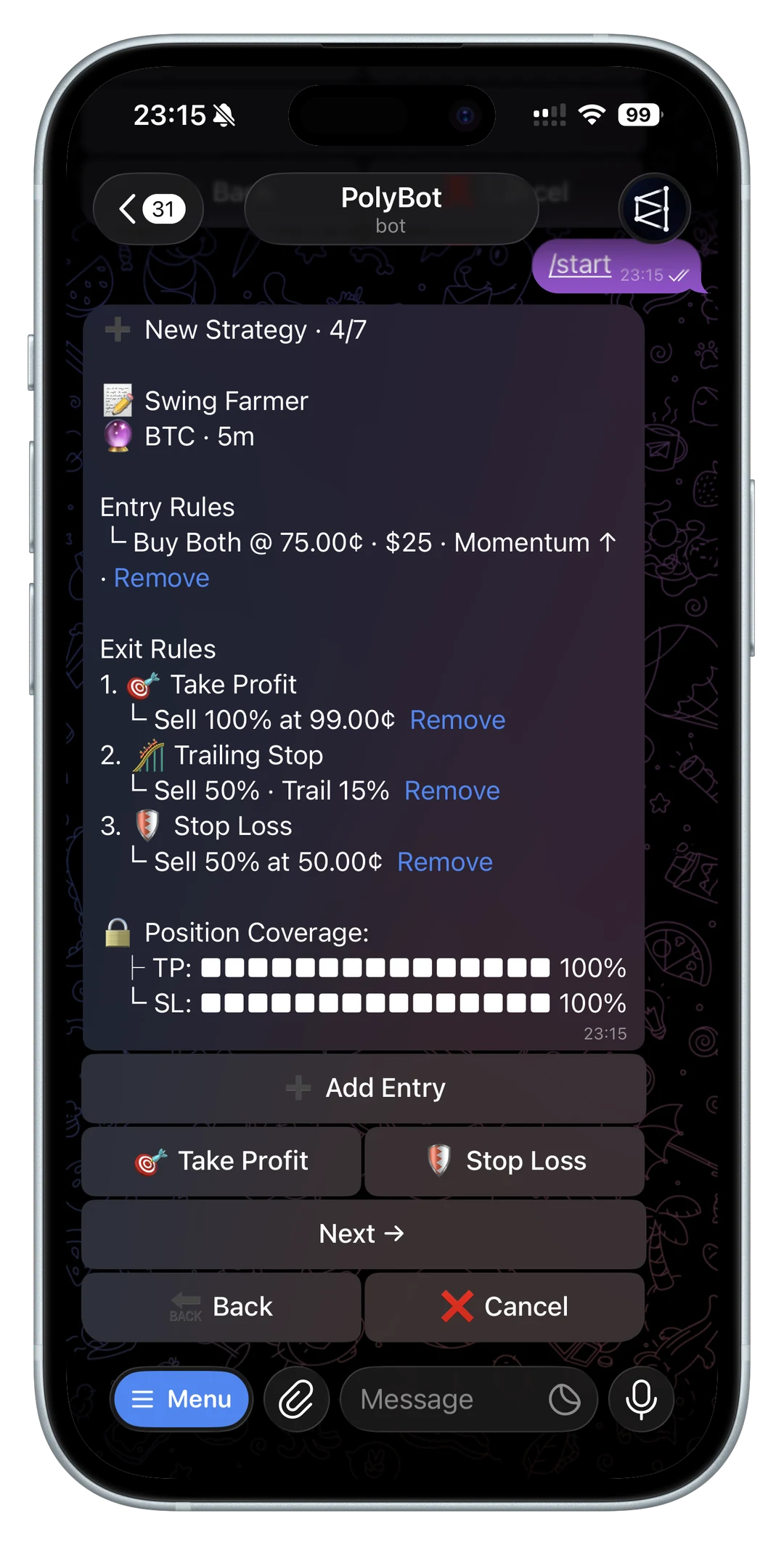
A Polymarket partial fill is not automatically an error.
It means only part of the order filled. The rest may have been cancelled, left open, or never matched depending on the order type. In a Telegram trading workflow, the important question is not only whether the order filled. It is whether the filled size still matches the trading plan.
Partial fills matter because prediction markets can be thin. A market can show a useful price while only a small amount of size is available there. If your order is larger than the current depth, the first part may fill and the rest may fail, cancel, rest on the book, or require another decision.
This guide explains how to think about Polymarket partial fills from Telegram: FAK and FOK behavior, limit-order remainders, liquidity checks, slippage, copied trades, exits, PnL, open orders, alerts, and risk review.
If you need the order-type glossary first, read the Polymarket order types guide. If the issue is liquidity, spread, or slippage, use the Polymarket liquidity guide. If you are reviewing the current account after a fill, use the Polymarket portfolio tracker bot guide.
If the partial fill came from an immediate buy or sell, read the Polymarket market orders from Telegram guide before retrying into worse depth. If slippage protection blocked the rest, use the Polymarket slippage tolerance guide before loosening the setting. If the remainder could rest as a maker-style order instead, use the Polymarket maker vs taker guide.
If the remainder is still open and not matching, use the Polymarket limit order not filled guide before replacing the order with a larger or looser one.
If the unfilled or rejected portion involved a custom price, use the Polymarket tick size guide before assuming liquidity was the only issue.
What a partial fill means
A partial fill means the order was matched for less than the full requested size.
Example:
- You try to buy $100 of YES.
- Only $37 fills before available liquidity runs out or the order condition stops matching.
- You now have a smaller position than planned.
That smaller position can be fine. It can also be a problem.
It depends on why the order filled partially, whether the remaining amount is still open, whether the trade only works at full size, and whether the filled position deserves the same exit plan as the intended position.
Do not treat "partial" as one category. There are several different cases:
- immediate partial fill with the rest cancelled
- resting limit order that filled only partly
- sell order that reduced only part of a position
- copied trade that filled for less than the leader
- multi-leg trade where one leg filled and another did not
- stop or take-profit exit that reduced exposure but did not close it
Each case needs a different review.
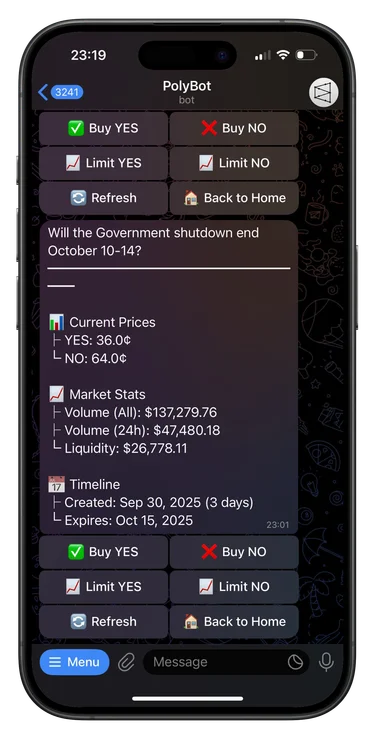
Why partial fills happen on Polymarket
Partial fills usually come from order-book depth.
The order book is a list of available bids and asks. If you buy immediately, you consume asks. If you sell immediately, you consume bids. If there is not enough size at acceptable prices, the order can fill only part of the requested amount.
Common causes include:
- not enough visible depth at the target price
- spread widened while the order was being prepared
- another trader consumed the same liquidity first
- worst-price or slippage limit blocked the remaining size
- limit order rested but only part of it matched
- market moved after a Telegram alert
- copied leader traded faster or at better liquidity
- order size was too large for the market
- related market or arbitrage leg moved before both sides filled
The market did not need to be broken. The book may simply not have supported the full order.
Use the Polymarket order book guide before placing meaningful size from Telegram.
FOK versus FAK partial-fill behavior
FOK and FAK are market-style behaviors used when the order should execute immediately against resting liquidity.
FOK means fill-or-kill. The whole order must fill immediately or it cancels. It is designed to avoid partial fills.
FAK means fill-and-kill. The order fills whatever is available immediately and cancels the rest. It allows partial fills.
This distinction matters.
Use FOK-style intent when:
- the trade only makes sense at full size
- a partial position would be too small to matter
- a basket or hedge breaks if only one part fills
- you do not want a leftover position to manage
- you would rather miss the trade than fill a small amount
Use FAK-style intent when:
- some exposure is better than none
- the available liquidity is uncertain
- you do not want a remainder resting as an open order
- you are willing to review the smaller result after execution
FAK can be useful, but it creates a review job. If you wanted $100 and got $18, the account now has a real position, but it may not be the position the original plan assumed.
Limit orders can also partially fill
Partial fills are not only a market-order issue.
A limit order can rest on the book and fill over time. It may fill in pieces as other traders cross your price. That is useful when you want price control. It also means a limit order can leave a remainder open.
Example:
- You place a limit buy for 500 shares at 42 cents.
- 120 shares fill.
- 380 shares remain open.
- The market moves away.
Now you have two things to review:
- the 120-share position that exists
- the remaining open order that can still fill later
That open remainder can create surprise exposure if the original thesis changes. A portfolio tracker should show both the filled position and the remaining order.
For limit-order workflow, read the Polymarket limit orders from Telegram guide. For account-level review, use the Polymarket portfolio and orders guide.
Partial buys change the entry plan
A partial buy creates smaller exposure than intended.
That can affect:
- expected upside
- maximum loss
- stop-loss sizing
- take-profit sizing
- copy-trading comparison
- whether the trade is worth tracking
- whether another order should complete the position
Before completing the rest manually, check whether the market still supports the trade. The first partial fill may have consumed the best price level. The next fill may be more expensive.
Ask:
- What price did the filled portion receive?
- What is the current best ask?
- How much depth remains near that price?
- Would filling the rest move through worse levels?
- Is the original thesis still valid?
- Is a limit order safer than another immediate buy?
Do not chase the remainder just because the first part filled.
Partial sells leave remaining exposure
A partial sell can feel like an exit, but it may not close the position.
If you try to sell 100% and only part fills, you still own the remaining shares. That remaining exposure can continue gaining or losing value. It can also need a new stop, take-profit, alert, or manual review.
After a partial sell, check:
- shares sold
- shares remaining
- average exit price
- current best bid
- remaining position value
- whether any sell order is still open
- whether the stop or take-profit rule needs adjustment
- whether the position should be reduced further with a limit order
For exit decisions, read how to sell a Polymarket position. For stop and take-profit behavior, read the Polymarket stop loss and take profit guide.
Copy trading makes partial fills more confusing
Copy trading adds another layer because the leader and follower may not fill the same way.
A leader can buy in a market before your copy order reaches the book. Their trade may consume liquidity, move the price, or trigger other traders. Your account may then fill less size, fill at a worse price, skip the trade, or fail because your settings blocked the remaining execution.
Useful copy-trading questions after a partial fill:
- How much did the leader buy?
- How much did your account copy?
- What was the leader's average fill price?
- What was your average fill price?
- Did your slippage setting block the rest?
- Did a daily cap or size limit cut the order down?
- Is the copied position still large enough to matter?
- Did the leader later add, reduce, or exit?
Partial copied trades are not automatically bad. Sometimes they protect the follower from chasing weak liquidity. But they must be visible.
Use the Polymarket copy trading settings guide and the copy trading skipped trades guide to separate settings, account constraints, and market liquidity.
Partial fills affect PnL review
PnL depends on the actual shares and prices that filled, not the size you intended to trade.
If a buy partially fills, your unrealized PnL should be based on the smaller filled position. If a sell partially fills, realized and unrealized values can both exist: the sold portion has an exit result, while the remaining position still moves with the market.
This can confuse portfolio review.
Common mistakes:
- assuming full position size filled
- treating a partial sell as a complete exit
- ignoring the remaining open order
- comparing copied PnL to the leader without matching fill size
- forgetting that fees, spread, and slippage apply to the actual fill
- using displayed midpoint value instead of executable bid or ask
Use the Polymarket PnL tracker guide and Polymarket trading costs guide before judging whether a partial fill was good or bad.
Partial fill versus failed order
A partial fill and a failed order are different outcomes.
A failed order may create no position. A partial fill creates some position or reduces some position. That difference matters for risk.
After any order issue, answer:
- Did any shares fill?
- Did funds or shares remain reserved in an open order?
- Is there a new position?
- Is there a remaining position?
- Was the rest cancelled?
- Did the bot show an error, warning, or skip reason?
- Should an alert or stop rule be updated?
Do not assume a failed-looking order left the account unchanged. Check the portfolio, open orders, and trade history. If there is still an unfilled remainder, use the Polymarket open orders and cancel orders guide before retrying.
For error messages and rejects, use the Polymarket order failed guide.
Alerts should mention partial fills
Order notifications should make partial fills visible.
A useful Telegram alert should show:
- market
- outcome side
- buy or sell
- requested size
- filled size
- average fill price
- remaining size
- whether the rest was cancelled or remains open
- next review action
If the alert only says "filled" without size, the trader may assume the full order executed. If the alert only says "failed" without fill detail, the trader may miss new exposure.
Use the Polymarket notification bot guide so fills, rejects, copied-trade skips, portfolio reminders, and order updates stay separated.
Partial fills in multi-leg or arbitrage trades
Partial fills are especially dangerous when a trade has more than one leg.
In a related-market or arbitrage-style setup, the edge may depend on both sides filling. If one side fills and the other does not, the account can be left with unhedged exposure. A trade that looked balanced before execution can become directional risk after a partial fill.
Before attempting multi-leg execution, define:
- which leg should go first
- whether each leg uses FOK or FAK intent
- whether partial fills are acceptable
- maximum unhedged exposure
- how to unwind if only one side fills
- whether the spread still exists after the first fill
- whether the remaining liquidity is enough
The Polymarket arbitrage guide explains why apparent edges can disappear through fees, spread, slippage, stale data, and partial fills.
How to reduce unwanted partial fills
You cannot remove partial-fill risk completely, but you can make it less surprising.
Useful controls include:
- smaller order size
- tighter slippage limits
- using FOK-style intent when full size matters
- using limit orders when price matters more than speed
- checking visible depth before order placement
- avoiding thin markets for large size
- avoiding market orders immediately after volatile alerts
- reviewing related markets before multi-leg trades
- keeping copy-trading slippage and cap settings strict
- setting alerts for partially filled orders
The simplest control is size. If the order is too large for the book, every other control becomes harder.
A practical partial-fill review workflow
After a partial fill, do this:
- Confirm filled size and average fill price.
- Check whether the remainder was cancelled or still open.
- Review current bid, ask, spread, and depth.
- Compare the actual position to the intended size.
- Decide whether the smaller position still deserves the same exit plan.
- Update stop-loss, take-profit, or alerts if needed.
- Cancel stale remainders if the thesis changed.
- Check PnL using actual filled shares.
- For copied trades, compare your fill to the leader's fill.
- Record whether the order type was appropriate.
This turns a partial fill from a surprise into a normal execution review.
Polymarket partial fills checklist
Before moving on from a partial fill, answer:
- What order type was used?
- How much size was requested?
- How much filled?
- What average price filled?
- Was the rest cancelled or left open?
- Is there a new or remaining position?
- Is there enough liquidity to complete or exit?
- Did slippage controls block the rest?
- Does the trade still fit the risk budget?
- Do stop-loss or take-profit rules need updating?
- Did a copied-trade setting or cap affect the fill?
- Should an alert be added for the remaining position or order?
If you cannot answer those questions, slow down before placing another order.
Common questions about Polymarket partial fills
What is a partial fill on Polymarket?
A partial fill means only part of the requested order matched. The remaining size may be cancelled or remain open depending on order type and workflow.
Are partial fills bad?
Not always. A partial fill can be acceptable when some exposure is useful and the rest would require chasing worse prices. It is bad when the trade only works at full size or when the remaining exposure is ignored.
What order type avoids partial fills?
FOK-style intent avoids partial fills by requiring the full order to fill immediately or cancel. It can also fail more often when there is not enough depth.
Why did my limit order only fill partly?
Only part of the market crossed your limit price. The remaining size may still be resting unless it was cancelled or expired. Review open orders before assuming the trade is complete.
Can copy trading partially fill?
Yes. A copied trade can partially fill if liquidity changes, slippage settings block the rest, caps reduce the order, or the leader's trade consumes the best depth before your copy reaches the book.
Partial fills are execution information
A partial fill tells you something about the market.
It says the order book could not give you the full requested result under the order's conditions. That information should change the next decision. Maybe you accept the smaller position. Maybe you post a limit order. Maybe you cancel the remainder. Maybe you stop because the market is too thin.
Use partial fills as execution feedback, not as noise to ignore.
Not investment advice, legal advice, tax advice, or security advice. Prediction markets are risky, and partial fills can leave exposure that needs active review.
How to Sell a Polymarket Position: Market Sells, Limit Sells, Stop Losses, and Redeems
A practical guide to closing Polymarket positions from Telegram: market sells, limit sells, partial exits, stop losses, take profits, open orders, liquidity, PnL, redeeming winners, and withdrawals.
Execution / 10 min
Why Did My Polymarket Limit Order Not Fill? Price, Liquidity, and Open Order Fixes
A practical guide for Polymarket traders whose limit order is still open, partially filled, stale, rejected, or not matching from Telegram.
Execution / 9 min