Polymarket Maker vs Taker Orders: Fees, Post-Only, Market Orders, and Telegram Risk
How maker and taker orders work on Polymarket: market orders, limit orders, post-only behavior, fees, maker rebates, crossed-book rejects, and Telegram trading risk.

PolyBot Team
Updated June 1, 2026
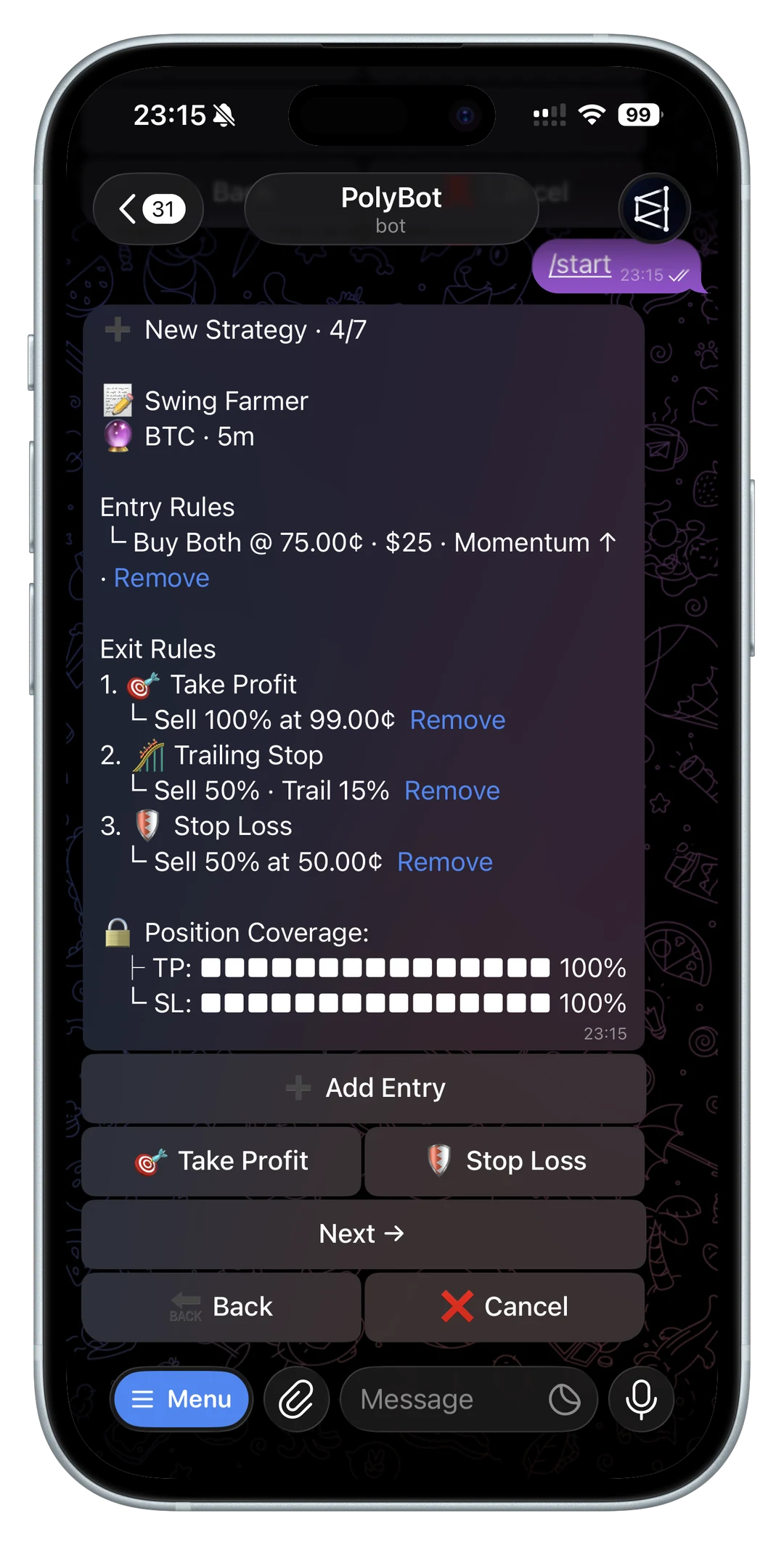
Maker versus taker is one of the simplest Polymarket concepts to define and one of the easiest to misuse.
A taker wants execution now. A maker waits on the order book. That difference affects fees, rebates, spread, fill certainty, stale-order risk, and whether a Telegram trader should use a market order, a normal limit order, or no order at all.
This guide explains maker and taker orders from a trader's point of view: market orders, limit orders, post-only behavior, crossed-book rejects, maker rebates, order-book depth, alerts, copy trading, API bots, and portfolio review.
If you want the full cost stack first, read the Polymarket trading costs guide. If you need bid, ask, spread, and depth vocabulary, start with the Polymarket order book guide. If your question is about continuous quoting or rebate chasing, read the Polymarket market making bot guide.
If your maker-style order is sitting on the book and has not matched, read the Polymarket limit order not filled guide before assuming the passive quote is broken.
Maker versus taker in plain English
A maker adds liquidity.
A taker removes liquidity.
If you place an order that rests on the book and another trader later trades against it, you acted as the maker. If you trade immediately against an existing bid or ask, you acted as the taker.
Example:
- The best ask is 52 cents.
- You buy immediately at 52 cents.
- You took the available ask.
- You are the taker.
Another example:
- The best bid is 48 cents.
- You place a buy limit order at 47 cents.
- It waits on the book.
- Someone later sells into it.
- You were the maker for that fill.
The maker/taker label is not a personality type. It is about the order's role when it matches.
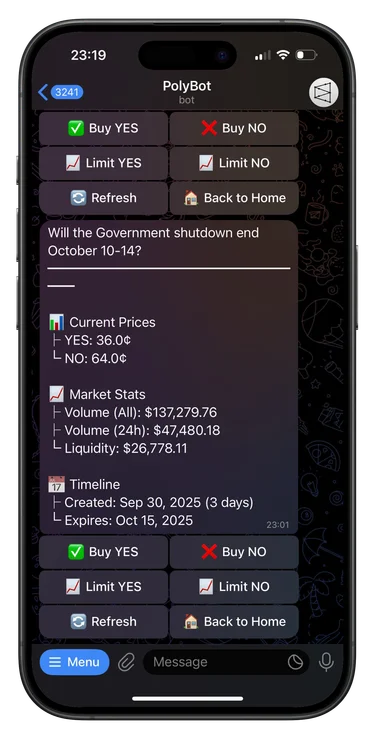
Why maker and taker matters on Polymarket
The difference matters because maker and taker workflows solve different problems.
A taker workflow is useful when:
- speed matters
- the market is moving
- the spread is tight
- there is enough depth for your size
- missing the trade is worse than paying for immediacy
A maker workflow is useful when:
- price control matters
- the spread is wide
- you are willing to wait
- you want to add liquidity
- the trade only makes sense at a specific price
- you are comfortable with the order not filling
Neither side is always better.
A taker can get a fast fill but pay the spread and applicable fee. A maker can avoid immediate crossing, but the order may miss, become stale, or fill later after the reason for the trade is gone.
Fees and rebates change the math
Polymarket's fees documentation says fees are applied at match time, makers are not charged protocol fees, and only takers pay protocol fees on fee-enabled markets. It also describes maker rebates for eligible markets.
That is important, but it is not the whole trade.
Maker-style execution can reduce explicit fee drag, but it can still lose money through:
- bad quote price
- stale orders
- missed entry
- adverse selection
- inventory risk
- wide exit spread
- poor cancellation discipline
- market resolution timing
Taker-style execution can be more expensive, but it can still be correct when:
- the news is confirmed
- the order book is deep
- the spread is tight
- the market will likely move before a limit order fills
- the worst acceptable price is still inside the plan
For cost review, compare explicit fees with spread, slippage, and opportunity cost. A fee-free maker order that fills at the wrong time can be worse than a small taker fee on a clean execution.
Market orders are usually taker-style decisions
A Polymarket market order from Telegram is a taker-style decision: you want immediate execution against available liquidity.
Polymarket's order documentation explains that all orders are expressed as limit orders, while market-style behavior uses a marketable price to execute immediately against resting liquidity.
Trader translation:
- market buy takes available asks
- market sell takes available bids
- FOK requires the whole order to fill immediately or cancel
- FAK fills what is available immediately and cancels the rest
- the final fill depends on bid/ask depth and protection limits
Use market orders only when you have already checked spread, depth, size, and slippage tolerance.
For that workflow, read the Polymarket market orders from Telegram guide and the Polymarket slippage tolerance guide.
Limit orders can be maker or taker
A limit order is not automatically maker-only.
It depends on whether the limit price crosses the current book.
If YES has a best ask at 52 cents and you place a buy limit at 51 cents, the order may rest on the book. If another trader later sells into it, you are the maker.
If YES has a best ask at 52 cents and you place a buy limit at 53 cents, the order is marketable. It can immediately take the existing ask, making you the taker for that fill.
That is why limit orders are price controls, not guaranteed maker controls.
Use a normal limit order when:
- you care about maximum buy price or minimum sell price
- you are fine with either resting or filling if the book already supports the price
- you want price discipline more than maker purity
Use post-only behavior only when you specifically want the order to add liquidity and reject instead of taking.
If the rejection is about price precision rather than crossing the book, use the Polymarket tick size guide before changing maker/taker intent.
For trader-level limit workflow, read Polymarket limit orders from Telegram.
Post-only means maker intent
Post-only is the strict version of maker intent.
Polymarket's order docs say post-only orders are limit orders that will only rest on the book and will be rejected if they would match immediately. The docs also say post-only works with GTC and GTD order types, not FOK or FAK.
That means post-only answers a narrow question:
Do I want this order to add liquidity, or do I want it rejected?
Use post-only behavior when:
- accidental taker execution would break the strategy
- you are quoting for maker economics
- you are building or using market-making automation
- you want to avoid crossing the spread by mistake
- a rejected order is better than an immediate fill
Do not use post-only when:
- you need immediate entry
- you are reacting to breaking news
- you are closing risk urgently
- you want FOK or FAK market-style behavior
- a rejected order would create confusion
If a post-only order rejects, it may be working correctly. The order tried to cross the book, so the system refused maker-only behavior.
For error handling, read the Polymarket order failed error codes guide.
Crossed-book rejects are not always bugs
A crossed-book reject means the requested price would match immediately against the current order book.
For normal taker execution, crossing the book can be expected. For post-only maker execution, crossing the book conflicts with the order's intent.
Example:
- best ask: 52 cents
- post-only buy price: 53 cents
- result: reject, because the buy would immediately take the 52 cent ask
The fix depends on intent.
If you wanted maker behavior:
- lower the buy price below the best ask
- raise the sell price above the best bid
- refresh the order book
- use GTC or GTD, not FOK or FAK
- accept that the order may not fill
If you wanted immediate execution:
- remove post-only behavior
- use market-style execution or a marketable limit
- confirm slippage tolerance
- check depth and spread first
For book-reading mechanics, use the Polymarket order book guide.
GTC, GTD, FOK, and FAK map to different intents
Order type controls what happens after submission.
Polymarket's order-type docs describe the core split:
- GTC rests until filled or cancelled.
- GTD rests until a specified expiration time.
- FOK fills fully immediately or cancels.
- FAK fills available size immediately and cancels the rest.
Maker-style workflows usually use GTC or GTD because the order needs to rest.
Taker-style workflows usually use FOK or FAK because the order needs immediate matching against existing liquidity.
Post-only belongs with resting limit orders. It does not fit immediate market-style behavior.
For a deeper glossary, read Polymarket order types: FOK, FAK, GTC, and GTD.
Maker rebates are not guaranteed profit
Maker rebates can improve execution economics, but they do not make every maker order good.
Polymarket's maker rebates documentation says rebates are tied to eligible maker liquidity and distributed from taker fees in eligible markets.
That still leaves the core trading question:
- Was your quote good?
- Did it fill because you had edge or because the market moved against you?
- Did you cancel stale quotes quickly enough?
- Did you end with unwanted inventory?
- Did the rebate exceed the spread and inventory cost?
- Did you understand the market's resolution risk?
For normal Telegram traders, maker rebates are usually secondary. The first decision is whether you want the position at that price. If the answer is no, a possible rebate should not change that.
For continuous quoting, read the Polymarket market making bot guide.
Telegram trader decision table
Use this table as a first-pass workflow check:
| Situation | Better starting point | Why |
|---|---|---|
| Need fast entry in a deep book | market order | execution matters more than maker status |
| Want a specific entry price | limit order | price control matters |
| Want maker-only behavior | post-only GTC or GTD | reject is better than accidental taking |
| Need all size or none | FOK | avoids partial immediate fill |
| Accept some size now, cancel rest | FAK | useful for available liquidity without a remainder |
| Wide spread and no urgency | limit order or alert | avoid crossing bad spread |
| Breaking news with enough depth | market-style with strict tolerance | speed may matter |
| Thin market or small edge | strict limit or no trade | bad execution can erase the thesis |
If you are not sure which row applies, slow down and review the book before trading.
Alerts and scanners should not decide maker or taker
Alerts tell you something deserves attention. They do not decide the execution style.
A price alert may fire when a market touches your target, but the available ask may already be higher. A volume alert may show activity, but the best depth may still be thin. A wallet alert may reveal a large trade, but copying it as a taker could mean buying the move after the leader already consumed liquidity.
Before acting on an alert, choose:
- take now with a market-style order
- rest at a limit price
- use post-only maker behavior
- set a new alert
- skip the trade
Use the Polymarket price alerts bot guide, Polymarket market scanner bot guide, and Polymarket trading signals bot guide to keep discovery separate from execution.
Copy trading changes the maker/taker question
Copy trading often becomes taker-style execution because the follower is reacting after the leader's trade.
That does not mean copied trades are bad. It means the follower needs to compare their fill to the leader's fill.
For copied trades, review:
- leader fill price
- follower fill price
- time delay
- spread at copy time
- depth after the leader trade
- slippage setting
- skipped trades
- partial fills
- whether a resting limit copy would miss too much
If the follower always enters worse than the leader, the setup may need stricter slippage, smaller size, category filters, or no copy.
For the full copy setup, read the Polymarket copy trading settings guide and copy trading skipped trades guide.
API bots need explicit maker/taker rules
If you build a Polymarket API bot, maker/taker behavior should be a deliberate setting.
A bot should know:
- whether it is allowed to take liquidity
- whether post-only is required
- which order types are valid for the strategy
- how to react to crossed-book rejects
- when to cancel stale maker orders
- how to avoid repeated accidental taker execution
- whether fees, rebates, and builder fees apply
- how to reconcile partial fills and open orders
Do not hide this inside generic "place order" logic. Maker/taker behavior changes risk.
For implementation risk, read the Polymarket API trading bot guide, API keys and wallet permissions guide, and open orders and cancel orders guide.
Common maker/taker mistakes
Common mistakes include:
- assuming every limit order is maker-only
- using post-only when immediate execution is needed
- treating crossed-book rejection as a random failure
- chasing maker rebates without inventory rules
- crossing a wide spread because an alert fired
- ignoring taker fees on fee-enabled markets
- leaving maker orders open after the thesis changes
- using market orders in thin books without slippage review
- judging a copied trade without comparing leader and follower fill
- building an API bot without cancellation and reconciliation logic
Most of these mistakes come from mixing two different goals: get filled now versus wait for a better price. Decide which one matters before choosing the order type.
Practical maker-vs-taker checklist
Before choosing maker or taker behavior, answer:
- Do I need the trade now?
- What is the current best bid and ask?
- How wide is the spread?
- How much depth exists at the price I want?
- Is my size small enough for the book?
- Would a worse fill still fit the thesis?
- Is this market fee-enabled?
- Am I trying to add liquidity or remove it?
- Should a crossed-book order reject or fill?
- How will I cancel stale open orders?
After the trade or order placement, review:
- Did it fill as maker or taker?
- Was the fill price inside the plan?
- Did any part remain open?
- Did fees, spread, or slippage change the result?
- Did a post-only reject mean the book moved?
- Does the portfolio still match the intended exposure?
- Should future orders use market, limit, or post-only behavior?
The best order type is not the one that sounds more advanced. It is the one that matches the trade's real priority.
FAQ
What is the difference between maker and taker on Polymarket?
A maker adds liquidity by placing an order that rests on the order book. A taker removes liquidity by trading against an existing order. The difference affects fees, rebates, fill certainty, and stale-order risk.
Do makers pay Polymarket fees?
Polymarket's current fee docs say makers are not charged protocol fees. Only takers pay protocol fees on fee-enabled markets. Other tool, builder, funding, or withdrawal costs can still apply depending on the workflow.
Is a limit order always a maker order?
No. A limit order can rest as a maker order, but it can also cross the book and fill immediately if the price is marketable. Use post-only behavior when you specifically want maker-only execution.
What is post-only on Polymarket?
Post-only is maker-intent behavior. The order should rest on the book instead of matching immediately. If it would cross the spread and take liquidity, it is rejected.
Is maker better than taker?
Not always. Maker-style execution can reduce explicit fee drag and add liquidity, but it can miss trades, fill late, or become stale. Taker-style execution can be expensive, but it can be correct when speed and certainty matter.
Should Telegram traders care about maker rebates?
Usually as secondary context. Maker rebates may improve economics on eligible markets, but a rebate does not fix a bad quote, stale order, or unwanted position. Normal traders should first decide whether the price and exposure make sense.
Polymarket Market Making Bot Guide: Maker Orders, Rebates, Liquidity Rewards, and Risk
A practical guide to Polymarket market making bots: maker versus taker orders, post-only behavior, liquidity rewards, maker rebates, spreads, inventory risk, and safer Telegram trading checks.
Execution / 10 min
How to Sell a Polymarket Position: Market Sells, Limit Sells, Stop Losses, and Redeems
A practical guide to closing Polymarket positions from Telegram: market sells, limit sells, partial exits, stop losses, take profits, open orders, liquidity, PnL, redeeming winners, and withdrawals.
Execution / 10 min