Polymarket Order Book Explained: Bids, Asks, Spread, Depth, and Fill Price
A practical guide to reading the Polymarket order book: bids, asks, midpoint, spread, depth, market buys, market sells, limit orders, fill price, and Telegram trading checks.

PolyBot Team
Updated June 1, 2026
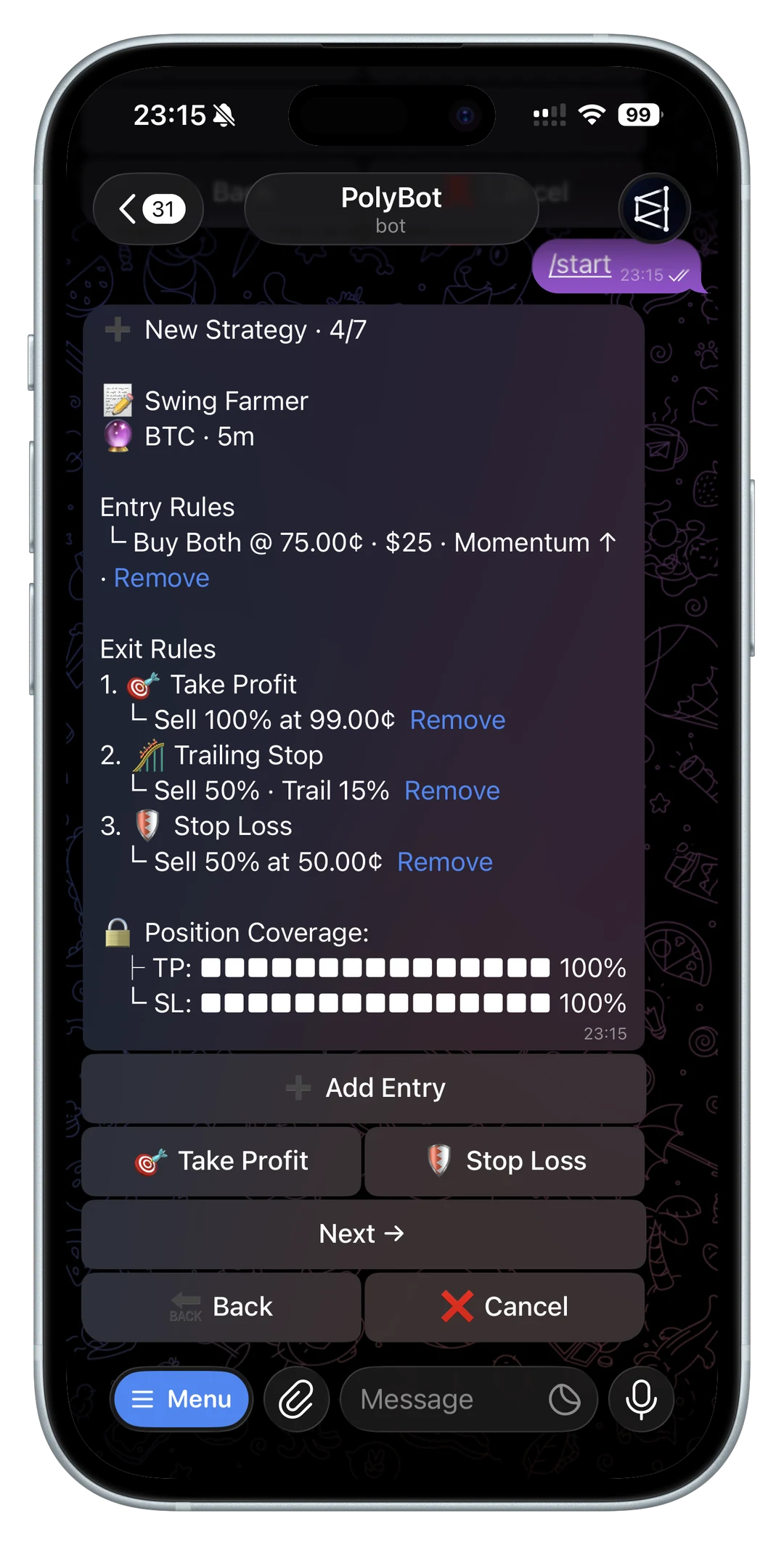
The Polymarket order book is where the price becomes executable.
A market card can show a clean probability, but the order book decides what you actually pay to buy, what you actually receive to sell, how much size is available, and whether a fast order fills cleanly or fails. If you trade from Telegram, understanding the order book is what keeps fast execution from becoming blind execution.
If you reached the order book from a price target or price-change notification, read the Polymarket price alerts bot guide so the alert level is checked against current bid, ask, spread, and depth.
For headline-driven markets, read this with the Polymarket news trading bot guide so breaking news does not hide a wide spread or thin book.
For volume-driven markets, read this with the Polymarket volume alerts bot guide so a busy market is checked against executable bid, ask, spread, and depth.
Polymarket's official Prices & Orderbook documentation explains that Polymarket uses a Central Limit Order Book, where prices come from supply and demand between users. Its Orderbook documentation shows the practical market-data fields: bids, asks, tick size, minimum order size, midpoint, spread, last trade price, depth, and real-time updates. PolyBot's Trading Guide explains how those ideas show up in Telegram confirmations, including estimated shares and price per share.
If you are reading the book because a limit order is still open, use the Polymarket limit order not filled guide to connect bid, ask, spread, depth, partial fills, and open-order cleanup.
This guide translates the order book into trader decisions: when to use a market order, when to use a limit order, when to reduce size, and when to skip the trade.
If you are using the book to decide whether to buy or sell immediately, use the Polymarket market orders from Telegram guide alongside this page.
For related-market and arbitrage setups, the book decides whether the spread is actually executable. The Polymarket arbitrage guide explains why every leg needs depth, price control, and partial-fill planning.
If the book only supports part of your intended size, use the Polymarket partial fills guide to review filled shares, remaining exposure, and whether another order would chase worse depth.
If your plan is to add liquidity instead of taking it, read the Polymarket maker vs taker guide and Polymarket market making bot guide before running maker-style automation.
What the Polymarket order book is
The order book is the list of open buy and sell orders for a market outcome.
It has two sides:
- bids: prices buyers are willing to pay
- asks: prices sellers are willing to accept
If you are buying immediately, you usually trade against asks. If you are selling immediately, you usually trade into bids.
That is why the displayed probability is not always your exact execution price. A market can look like 52 cents while the best ask is 55 cents and the best bid is 49 cents. If you buy now, the relevant number is closer to the ask. If you sell now, the relevant number is closer to the bid.
For the probability and payout model behind those prices, read Polymarket odds and prices explained.
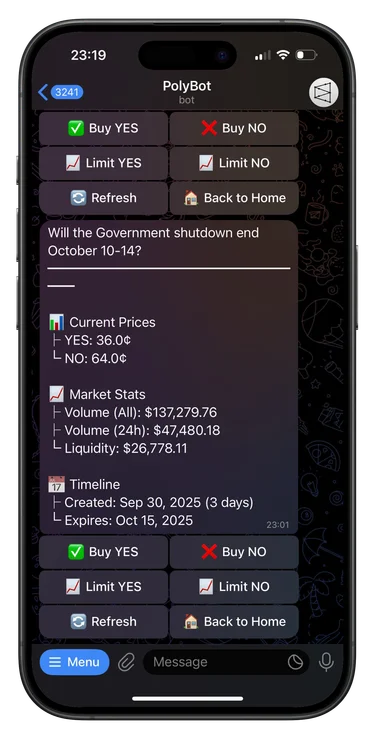
Bids answer: what can I sell for?
The bid side shows what buyers are currently willing to pay.
If you hold YES shares and want to sell immediately, the best bid is the first price to check. It is the highest visible price someone is currently offering for that outcome. The available size at that price matters too. If the best bid only has a small amount available, a larger sell can fill partly at the best bid and partly at lower bids.
Before selling, ask:
- What is the current best bid?
- How much size is available at that bid?
- How much lower is the next bid?
- Would my sell move through multiple bid levels?
- Would a limit sell protect the exit price better?
For exit workflow, read how to sell a Polymarket position.
Asks answer: what can I buy for?
The ask side shows what sellers are currently willing to accept.
If you want to buy YES immediately, the best ask is the first price to check. It is the lowest visible price someone is currently asking for that outcome. If the available size at the best ask is small, a larger buy may consume that level and continue into higher asks.
Before buying, ask:
- What is the current best ask?
- How much size is available at that ask?
- How much higher is the next ask?
- Would my buy move through multiple ask levels?
- Would a limit buy express my target price better?
For price-control workflow, read Polymarket limit orders from Telegram.
Midpoint is a signal, not a guarantee
The midpoint is the average between the best bid and best ask.
Polymarket's docs describe the displayed price as the bid-ask midpoint when the spread is reasonable, with last-trade fallback when the spread is wide. That makes the displayed price useful for scanning markets, but it does not guarantee your executable price.
Example:
- best bid: 34 cents
- best ask: 40 cents
- midpoint: 37 cents
The market may display around 37 cents, but buying immediately is closer to 40 cents and selling immediately is closer to 34 cents. The midpoint is the market's rough probability signal. The bid and ask are the immediate trade terms.
For the broader alert and signal workflow around those prices, read the Polymarket trading signals bot guide.
For fast entries after an alert or pasted link, read the Polymarket sniper bot guide before treating the midpoint as executable.
That distinction is the reason a trader can feel like "the price changed" even when the order book behaved normally.
Spread is the cost of immediacy
The spread is the gap between the best bid and best ask.
If the best bid is 48 cents and the best ask is 52 cents, the spread is 4 cents. If the best bid is 42 cents and the best ask is 58 cents, the spread is 16 cents.
A tight spread usually means the market has more active liquidity near the current price. A wide spread means immediate execution is more expensive or less certain.
Wide spread does not always mean "bad market." It means the trade needs a reason. You might still use a market order if urgency matters, but you should know you are paying for immediacy. You might use a limit order if price discipline matters more than filling now.
For the broader execution layer, read Polymarket liquidity, spread, and slippage.
For choosing when book movement should block a trade instead of accepting a worse fill, use the Polymarket slippage tolerance guide.
For how spread and slippage fit into total cost, read the Polymarket trading costs guide.
Depth decides whether size changes the fill
Depth means how much size is available at each price level.
A best ask of 60 cents is not enough information. You need to know whether there are 20 shares, 2,000 shares, or 200,000 shares available around that price. A $20 buy and a $2,000 buy can experience the same market very differently.
Thin depth can cause:
- partial fills
- worse average price
- order failures under protection rules
- copied trades that fill worse than the source wallet
- sells that receive less than the visible headline price
This is why order size should be compared to the order book, not only to your wallet balance.
For the bankroll side of that decision, read the Polymarket position sizing guide.
Fill price is often a weighted average
If an order consumes more than one price level, the final average price can be worse than the best visible price.
Suppose the ask side has:
- 100 shares at 50 cents
- 200 shares at 52 cents
- 300 shares at 55 cents
A small buy may fill at 50 cents. A larger buy may fill across 50, 52, and 55 cents. The average price is not the first ask; it is the weighted result across the levels consumed.
PolyBot's docs say Telegram confirmations can show estimated shares using order-book data when available. Treat those estimates as a pre-trade reality check. If the estimate is worse than expected, reduce size, use a limit order, or skip.
Market orders cross the book
A market-style order prioritizes immediate execution.
For a buy, that means taking available asks. For a sell, that means taking available bids. Polymarket's order documentation explains that all orders are technically limit orders, while market-style behavior uses a marketable price to execute immediately against resting liquidity.
Trader translation:
- A market buy pays sellers who are already resting asks.
- A market sell hits buyers who are already resting bids.
- The order can partially fill or fail depending on liquidity and order type.
- The final average price depends on the levels consumed.
For FOK, FAK, GTC, and GTD behavior, read the Polymarket order types guide.
Limit orders join the book
A limit order says: trade only at my price or better.
If the limit order does not execute immediately, it can rest on the book. That means your order becomes part of the visible supply or demand other traders can trade against.
Limit orders are useful when:
- the spread is wide
- the market is thin
- you have a target entry
- you have a target exit
- you want to avoid chasing an alert
- you are willing to miss the trade if price is wrong
The risk is stale exposure. If news changes and your old limit order remains open, it can fill later under a thesis you no longer believe. Use /orders or the relevant order-management view to review and cancel stale orders. For a deeper checklist, read the Polymarket open orders and cancel orders guide.
For portfolio review after placing orders, read Polymarket portfolio and orders in Telegram.
Last trade price can be misleading
The last trade price is the price of a recent completed trade. It is useful context, but it is not the same as current executable liquidity.
The last trade can mislead when:
- the trade was small
- the book moved afterward
- the spread is now wide
- the market is stale
- a large order consumed the best levels
- new information arrived after the trade
If you only look at last trade, you can overpay on entry or overestimate what you can receive on exit. Always pair last trade with current bid, ask, spread, and depth.
Search results should lead to book review
Market search is useful for finding opportunities, but a search result is not a fill guarantee.
When a Telegram market card opens, check:
- exact market question
- YES and NO meaning
- displayed price
- best bid and best ask context
- spread
- depth for your side
- expiry or resolution timing
- whether market or limit order fits
If the market is live, trending, or close to resolution, refresh before confirming. The book can change between discovery and execution.
For discovery workflow, read the Polymarket market search guide.
Copy trading makes order-book depth more important
Copy trading depends on the follower fill, not only the leader fill.
If a leader buys at 41 cents and your copied order fills at 48 cents, your expected value is different. The order book may have changed, other traders may have consumed the same liquidity, or your copied size may be too large for remaining depth.
When reviewing copied fills, compare:
- leader price
- follower price
- follower order size
- visible spread
- skipped trades
- partial fills
- market category
- whether the leader's trade moved the book
For copy-trading controls, read the Polymarket copy trading settings guide.
Why order-book failures are useful
An order failure can be frustrating, but it can also protect you from a bad trade.
If a market-style order cannot fill under its protection rules, the current book may not support the requested trade. If a limit order fails because of tick size, the requested price may not be valid for that market. If a post-only order crosses the spread, the order behavior conflicts with immediate matching.
For price-increment errors specifically, use the Polymarket tick size guide before changing the trading plan.
Before retrying, check:
- best bid and ask
- spread
- available size
- tick size
- minimum order size
- whether the market moved
- whether a smaller size or limit order fits better
For detailed troubleshooting, read the Polymarket order failed guide.
Telegram order-book checklist
Before confirming a Polymarket trade from Telegram, ask:
- Am I buying into asks or selling into bids?
- What is the best executable price for my side?
- How wide is the spread?
- How much depth exists near that price?
- Is my order small relative to visible size?
- Could the average fill be worse than the first level?
- Would a limit order express my price better?
- Could the market move before I confirm?
- Is the market near resolution?
- How will I review the fill afterward?
This is not meant to make every trade slow. It is meant to make fast trades honest about the executable price.
Order book FAQ
What is the Polymarket order book?
It is the list of open buy and sell orders for a market outcome. Bids show what buyers are willing to pay. Asks show what sellers are willing to accept.
What is the difference between displayed price and fill price?
Displayed price is often a midpoint or market indicator. Fill price is the actual average price your order receives after matching against available bids or asks.
Why did I pay more than the displayed price?
A buy order usually pays the ask, not the midpoint. If your order is large, it can also consume higher ask levels and produce a worse average fill.
Why did I receive less when selling?
A sell order usually receives the bid, not the midpoint. If your sell size is larger than best-bid depth, the order can fill at lower bid levels.
Does high volume mean the order book is deep?
Not always. Historical volume helps, but current depth near your price decides the next fill.
Trade the book, not only the headline
The order book is the live negotiation behind every Polymarket price.
The market idea tells you what you want to trade. The order book tells you whether the trade is still worth doing at the executable price and size. Read bids, asks, spread, and depth before treating a Telegram button as a final answer.
Not investment advice. Prediction markets are risky, liquidity can change quickly, and order-book conditions should be checked against the live product before trading.
Polymarket Liquidity, Spread, and Slippage in Telegram Trading
Learn how Polymarket liquidity, bid-ask spread, slippage, market orders, limit orders, partial fills, and failed FAK/FOK orders affect Telegram trading and copy trading.
Execution / 11 min
Why Execution Speed Matters in Prediction Market Copy Trading
Copy trading results aren't just about who you follow. Execution speed, slippage control, and workflow design change prediction-market outcomes.
Execution / 7 min