Polymarket Portfolio and Orders in Telegram: PnL, Sells, Redeems, and Open Orders
How to use a Polymarket Telegram bot portfolio and orders workflow: PnL, market sells, limit sells, stop losses, redeeming positions, PnL cards, and canceling open orders.

PolyBot Team
Updated June 1, 2026
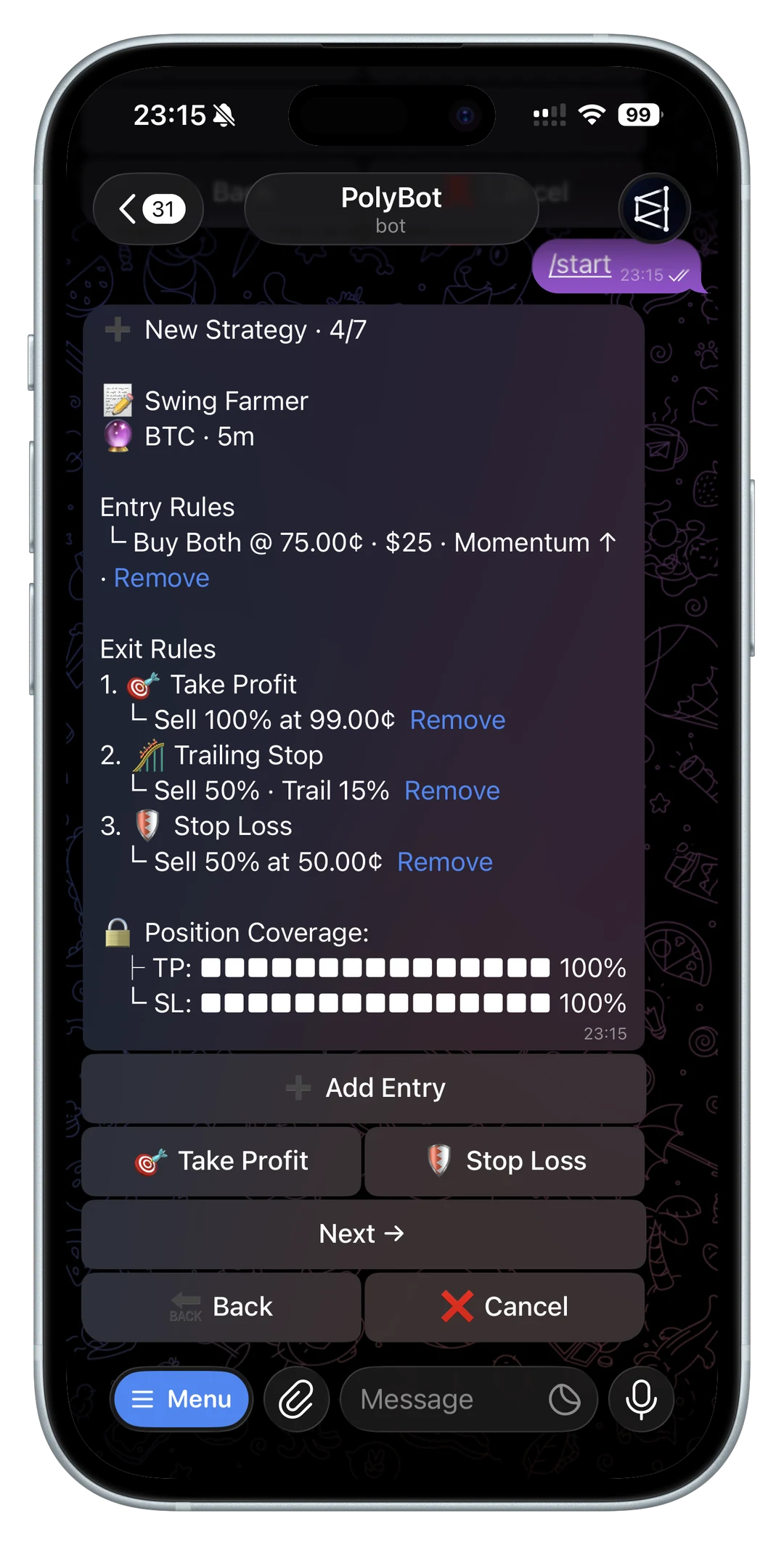
Opening a Polymarket trade is only the beginning of the workflow.
After the order fills, you still need to monitor the position, understand unrealized PnL, sell or protect the position, redeem settled winnings, and cancel open orders that no longer match your thesis. A Telegram trading bot is useful only if it makes that post-entry workflow easy to review.
PolyBot's official Portfolio & Orders Guide documents /portfolio, /orders, PnL, selling, stop losses, redeeming, PnL cards, and open-order management. The official Trading Guide also explains how market sells, limit sells, and order management fit into the broader trading flow.
This guide explains the trader-level checklist for managing Polymarket positions from Telegram.
If you want the broader account-level view across positions, PnL, open orders, alerts, copy-trading exposure, and redeems, read the Polymarket portfolio tracker bot guide.
If a buy, sell, or limit order only fills part of the requested size, read the Polymarket partial fills guide before treating the position or exit as complete.
If the portfolio action is an immediate sell or buy-back decision, read the Polymarket market orders from Telegram guide before crossing the current bid or ask.
If the portfolio action can wait at a limit price instead of crossing the spread, read the Polymarket maker vs taker guide before choosing between immediate execution and a resting order.
If portfolio updates, open-order changes, failed orders, redemptions, and price alerts all arrive as Telegram messages, read the Polymarket notification bot guide to keep each notification tied to the right review action.
If your main issue is an order that is still resting, reserving balance, or needs cancellation, use the Polymarket open orders and cancel orders guide.
If you need to know why that resting order has not filled yet, use the Polymarket limit order not filled guide before cancelling or replacing it.
If the goal is to move value out of the account, use the Polymarket cash-out guide to decide whether the next action is sell, redeem, cancel, or withdraw.
If you manage positions mostly from a phone, read the Polymarket mobile trading bot guide before relying on quick portfolio checks, sells, redeems, and order cancellations.
If you are reviewing another trader rather than your own account, start with the Polymarket wallet lookup guide before interpreting positions and activity.
Why portfolio review matters
Many trading mistakes happen after entry.
A trader may buy a reasonable position, then forget about it. A copied trade may create exposure in a market the user no longer wants. A limit order may remain open after the thesis has changed. A winning market may resolve, but the payout may stay unredeemed.
A portfolio view should answer:
- what markets you currently hold
- which outcome side you own
- how many shares you hold
- average entry price
- current value
- unrealized PnL
- whether the position is open, won, lost, or awaiting action
If the bot only makes buying easy but hides active exposure, it is incomplete.
For deciding how much exposure should exist before it reaches the portfolio, read the Polymarket position sizing guide.
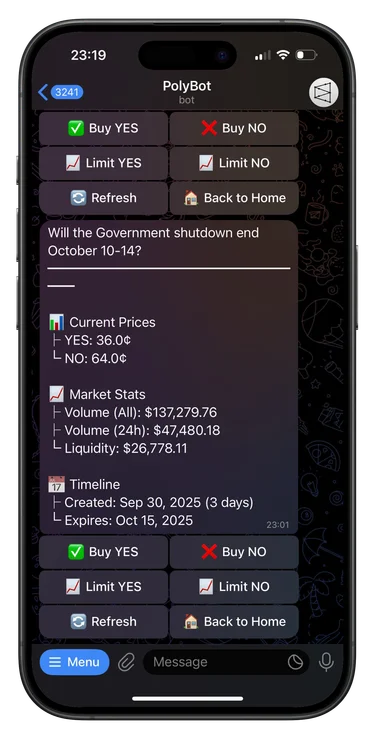
Understand PnL before reacting
Portfolio PnL is useful, but it needs context.
PolyBot's docs describe PnL as the difference between current price and average price, multiplied by shares. That makes it an unrealized value for open positions, not a guaranteed exit amount.
Before reacting to a green or red number, ask:
- is the current price fresh?
- is there enough liquidity to exit?
- is the spread wide?
- would selling move the market?
- is the market close to resolution?
- is this PnL unrealized or already settled?
For wallet-level performance review, read the Polymarket wallet analyzer guide. For trade-level execution cost, read Polymarket liquidity, spreads, and slippage.
For the bid, ask, spread, and depth behind exit value, read the Polymarket order book guide.
For a dedicated breakdown of realized PnL, unrealized PnL, open positions, and redeem state, read the Polymarket PnL tracker guide.
Use portfolio views to separate open and resolved positions
A useful portfolio workflow should distinguish active positions from resolved positions.
Open positions still have tradable market exposure. Resolved positions need cleanup: winning positions may need redemption, while losing positions may need clearing from the active view. History views are useful because they prevent old settled trades from cluttering the current decision surface.
For deeper recordkeeping beyond the active portfolio screen, read the Polymarket trade history and CSV guide.
This distinction matters for:
- calculating available balance
- knowing what can still be sold
- understanding claimable winnings
- reviewing realized versus unrealized outcomes
- avoiding duplicate trades in the same market
For multi-outcome event positions, read the Polymarket negative-risk markets guide so related outcomes and open orders are reviewed together.
If your balance looks wrong, do not assume the funds are missing. Open orders, unresolved markets, claimable positions, or pending redemption can all change what is currently available.
Selling a position at market
A market sell is the fastest way to reduce or close exposure.
PolyBot's docs describe a sell flow from the portfolio: pick a position, choose Sell, select a percentage such as 25%, 50%, 75%, or 100%, or enter a custom number of shares, then confirm.
For a dedicated exit walkthrough, read how to sell a Polymarket position.
Before selling at market, check whether your slippage tolerance still fits the exit price and current bid depth.
Before selling at market, check:
- current bid and ask
- position size
- whether a partial sell fits better than a full exit
- whether a limit sell would protect price
- whether fees or spread make the exit unattractive
- whether the market is resolving soon
Partial sells can help lock in some profit while keeping upside. They can also reduce risk if the original position became too large.
Limit sells and stop losses are different exits
A limit sell sets an exit price and waits for the market to reach it. A stop loss attempts to protect downside if the market moves against you.
They solve different problems:
- limit sell: "sell only if the price reaches my target"
- stop loss: "try to exit if the position breaks my risk level"
- trailing stop: "follow a winner, then exit after a defined reversal"
If you are managing several entries or partial exits on the same outcome, read the Polymarket scale-in and scale-out guide so open orders and active exit rules do not hide total exposure.
For target exits, read Polymarket limit orders from Telegram. For downside, upside, trailing, and reusable preset rules, read Polymarket stop loss and take profit in Telegram.
Redeem resolved winning positions
When a market resolves and your outcome wins, the position usually needs to be redeemed so the payout returns to the tradable balance.
A portfolio workflow should make resolved positions obvious. PolyBot's docs describe Redeem for winning positions, Clear for losing positions, and Claim all when multiple winning positions are available.
Before assuming capital is available for the next trade, check:
- has the market fully resolved?
- is the position on the winning side?
- has redemption already been queued?
- did the wallet receive a follow-up status?
- is auto-claim enabled?
- does the balance need refresh?
For the deeper settlement workflow, read Polymarket auto-claim and redeem winnings in Telegram.
PnL cards are sharing tools, not decision tools
PnL cards can be useful in Telegram groups and communities because they summarize a position visually. For a dedicated checklist on what a card can and cannot prove, read the Polymarket PnL card guide.
But a shareable card is not the same as risk review. A large positive PnL card may hide a small starting size. A large percentage gain may not mean a large dollar gain. A good screenshot can also encourage traders to chase the next entry without checking liquidity.
For copied wallets, pair PnL review with the copy trading bankroll and drawdown guide so position size, drawdown, and leader allocation stay visible.
Use PnL cards for communication, not as the only trading record. For serious review, keep track of entry price, exit price, size, fees, slippage, and whether the trade followed the original plan.
Use the orders hub to control open orders
Open orders can outlive the idea that created them.
A good orders view should show:
- open limit-order count
- active stop-loss count
- market and outcome
- side
- limit price versus current price
- fill progress
- order size
- cancellation controls
PolyBot's docs describe an orders hub with links to presets and portfolio, plus a cancel-all action for open limit orders. That matters because one stale order can reserve balance or create unwanted exposure later.
If an order no longer matches the thesis, cancel it. Do not leave old orders in the book because you forgot they existed.
Troubleshooting portfolio and order issues
If something looks wrong, use a structured checklist.
Position missing:
- refresh the portfolio
- check whether the market resolved
- check whether the order filled or was cancelled
- check whether you are in the right wallet/account
Cannot sell:
- check whether shares are reserved by open limit orders
- check whether stop-loss or strategy exits are active
- check whether the market is still tradeable
- check whether the position is too small for the chosen order type
PnL looks wrong:
- refresh prices
- check spread and liquidity
- confirm whether the value is unrealized
- compare with recent fills and average entry price
For failed order reasons, read the Polymarket order failed guide.
If a copied trade skipped before it became an order, use the Polymarket copy trading skipped trades guide before looking for a portfolio or order-entry bug.
Portfolio review is part of risk management
The best Telegram workflows make it easy to buy, but also easy to slow down after the buy.
Review open positions, check PnL in context, sell deliberately, redeem resolved winnings, and cancel stale orders. That routine keeps fast execution from turning into unmanaged exposure.
Not investment advice. Prediction markets can lose money, PnL can change quickly, and order or redemption behavior should be verified against current official docs before trading.
Polymarket Portfolio Tracker Bot Guide: Positions, PnL, Orders, Alerts, and Redeems
How to use a Polymarket portfolio tracker bot from Telegram: open positions, realized and unrealized PnL, orders, alerts, copy trading exposure, redeems, and risk checks.
Telegram Trading / 11 min
Polymarket Market Scanner Bot Guide: Find Markets, Alerts, Liquidity, Wallet Signals, and Risk
How to evaluate a Polymarket market scanner bot workflow: search, trending markets, volume, price alerts, whale alerts, wallet signals, liquidity, order books, and risk controls.
Telegram Trading / 12 min