Polymarket Auto-Claim and Redeem Winnings in Telegram: Resolved Markets, Payouts, and Balance
How Polymarket auto-claim and manual redemption work in a Telegram bot: resolved markets, winning shares, claim-all, pending redemptions, pUSD balance, notifications, and troubleshooting.

PolyBot Team
Updated June 1, 2026
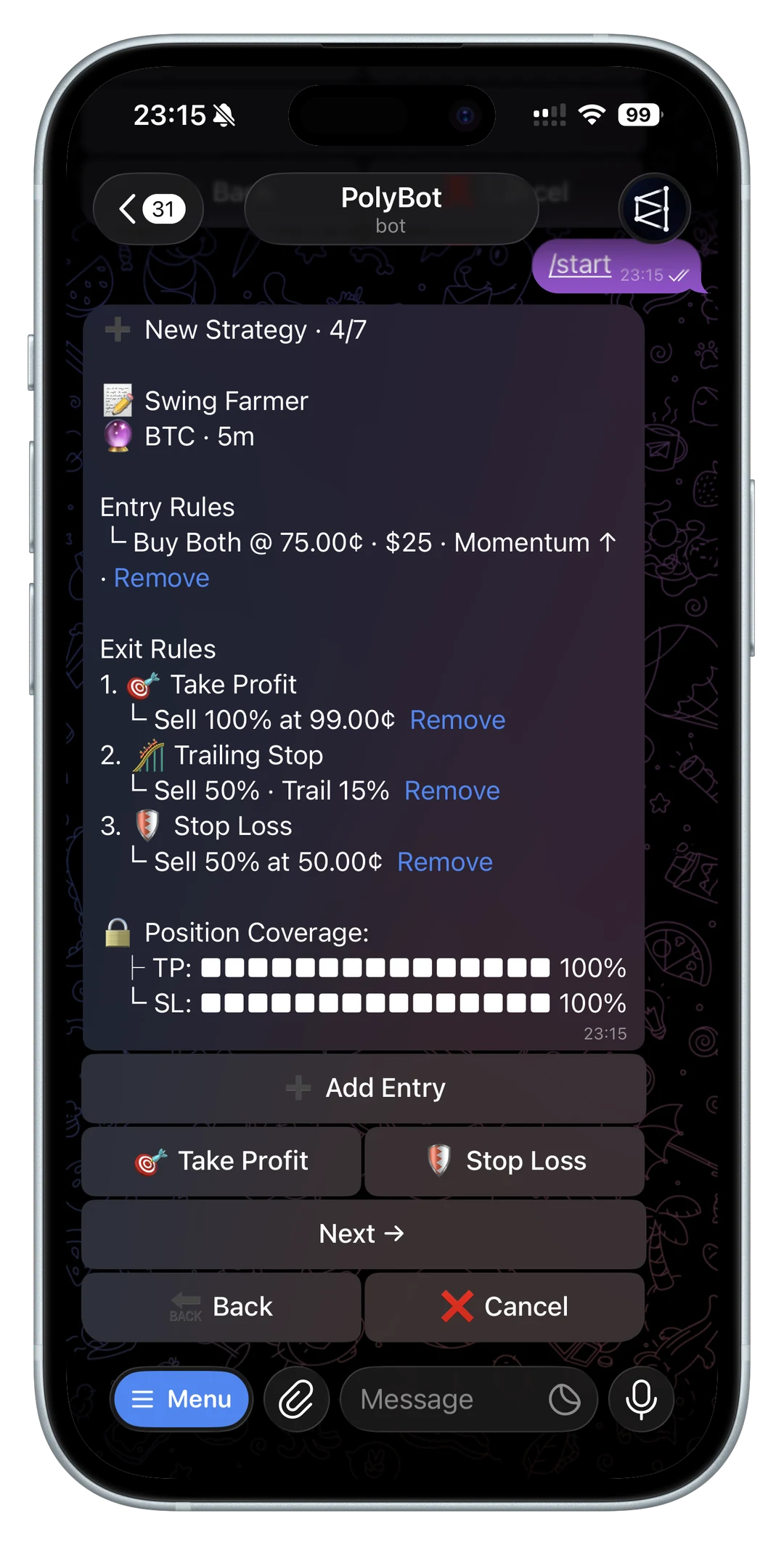
Winning a Polymarket position is not always the final step.
After a market resolves, winning outcome shares need to be redeemed so the payout returns to your tradable balance. If that step is missed, the position may show a win while the capital still feels unavailable for the next trade.
That is why auto-claim matters in a Telegram trading workflow. It is not a trading strategy. It is a settlement workflow that helps resolved winnings move back into the balance without making the user manually check every finished market.
PolyBot's official Auto-Claim Guide describes auto-claim as automatic redemption for winning positions after markets resolve. The Portfolio & Orders Guide explains the manual side: redeem winning positions, clear losing positions, and use Claim all when multiple resolved positions need action.
This guide explains how to think about Polymarket auto-claim and manual redemption from a trader's point of view.
If you want the broader notification workflow around redeemable winnings, order status, portfolio reminders, copied trades, and price alerts, read the Polymarket notification bot guide.
If you need resolved markets shown beside open positions, PnL, orders, and alerts, read the Polymarket portfolio tracker bot guide before assuming a payout has returned to usable balance.
If the real goal is to move money out after settlement, use the Polymarket cash-out guide to separate redeem, available balance, and withdrawal.
What redemption means on Polymarket
Polymarket positions are outcome shares. If you buy YES and YES wins, those winning shares become redeemable after the market resolves. Redeeming converts the winning shares into payout value.
For a simple binary market, the mental model is:
- winning shares redeem at $1.00 per share
- losing shares have no payout
- the market needs to resolve first
- the payout must be returned to a usable wallet or tradable balance
For the price and share mechanics behind that payout, read Polymarket odds and prices explained.
For the rule and dispute side of settlement, read the Polymarket resolution rules guide before assuming an event ending means payout is already available.
The exact settlement mechanics are under the hood. The practical workflow is simpler: check whether the market resolved, confirm whether your side won, redeem if needed, then verify the balance.
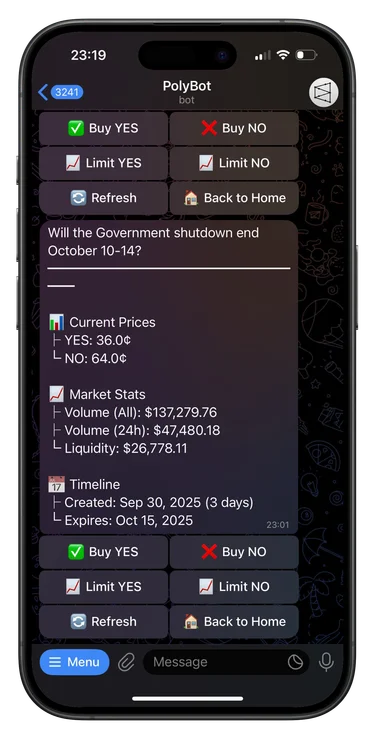
Auto-claim versus manual redeem
Auto-claim and manual redeem do the same broad job: they handle resolved positions.
The difference is control and timing.
Manual redeem is useful when:
- you want to inspect each resolved position yourself
- only one market needs action
- you are debugging a balance question
- you prefer explicit confirmation
- you recently changed account or wallet settings
Auto-claim is useful when:
- you trade many small markets
- you copy wallets across many markets
- you use short-window strategies
- you do not want winnings sitting unredeemed
- you want resolved losing positions cleared from the active view
PolyBot's docs describe auto-claim as disabled by default and available in settings. That is a good default because users should understand what gets claimed before enabling it.
What gets claimed
Auto-claim should be judged by what it does and what it does not do.
For winning positions:
- the resolved position is detected
- winning shares are redeemed
- payout is added back to the tradable balance
- the user receives a notification or summary
For losing positions:
- there is no payout
- settled shares can be cleared from the active portfolio view
- the loss remains part of trade history and PnL review
For the broader recordkeeping workflow, read the Polymarket trade history guide.
Auto-claim is not a withdrawal. It should not move funds out of your wallet. It returns resolved winnings to the balance used for trading.
Why auto-claim is an SEO-sized feature, not a tiny setting
Redemption looks small until it fails or gets forgotten.
Common trader questions include:
- Why did a winning position not return to balance?
- Is the market fully resolved?
- Did I claim the winnings already?
- Why does the portfolio still show a resolved position?
- Is this payout pending?
- Do I need to pay gas?
- Can a bot auto-redeem winnings?
Those are not entry questions. They happen after a trader already used the product. That makes the page valuable for both SEO and support: it captures intent from users who are trying to understand where settled value went.
For the full post-trade workflow, read Polymarket portfolio and orders in Telegram.
For the PnL side of the same question, read the Polymarket PnL tracker guide, which separates unrealized value, realized results, redeemable winnings, and pending claims.
When auto-claim runs
Auto-claim is not the same as instant settlement.
A market must resolve first. After resolution, the system needs to detect redeemable positions, queue the redemption, process it, and send a follow-up result. There can be a short delay between the market resolving and the payout appearing in balance.
Before assuming something is wrong, check:
- has the market actually resolved?
- did the outcome you hold win?
- is auto-claim enabled?
- did a redemption job get queued?
- did you receive a notification?
- has the wallet or balance screen refreshed?
If the answer is unclear, use manual portfolio review before making another deposit or trade decision.
Claim all and queued redemption
Manual redemption can still matter even when auto-claim exists.
If multiple markets resolved, a portfolio workflow may offer Claim all. That queues redeemable winning positions for the wallet instead of requiring each one to be tapped separately.
A queued redemption state is important because it prevents duplicate assumptions. If a position says redemption is pending, the user should wait for the follow-up status instead of repeatedly trying to claim the same position.
Good redemption UX should make these states visible:
- redeemable
- redeem queued
- redeemed
- lost and clearable
- clear pending
- failed or retrying
That is why portfolio review remains part of the workflow. Automation should reduce manual work, not hide state.
How auto-claim affects available balance
Available balance can differ from what a trader expects.
Reasons include:
- open limit orders reserving balance
- active positions still unresolved
- resolved winnings not yet redeemed
- redemption pending
- copied trades using available funds
- recent deposits or withdrawals
- wallet screen needing refresh
Auto-claim helps with one of those causes: resolved winnings sitting outside the active tradable balance. It does not explain every balance mismatch.
If balance looks wrong, review open orders, portfolio, recent activity, and wallet state together. For open-order effects, read Polymarket limit orders from Telegram and the Polymarket open orders and cancel orders guide.
Auto-claim for copy trading
Copy traders can accumulate many small resolved positions.
If you copy multiple wallets or markets, settlement cleanup becomes easy to ignore. You may have small wins, small losses, partial exits, and open orders spread across many positions. Auto-claim can help keep the portfolio cleaner after markets resolve.
But auto-claim does not replace copy-trading review. You still need to ask:
- was the copied wallet profitable after exits?
- did copied entries fill near the source wallet?
- were resolved wins large enough to matter?
- did failed or skipped trades change the result?
- should the copied wallet remain active?
For setup discipline, read how to copy trade on Polymarket from Telegram and the best Polymarket copy trading bot checklist.
Auto-claim for short-window strategies
Short-window markets make redemption more visible because markets can resolve frequently.
If you trade crypto up/down markets or other fast-resolving outcomes, manual cleanup can become repetitive. Auto-claim helps convert settled wins back into the trading loop without forcing the user to remember every resolved position.
Still, settlement is separate from strategy performance. A strategy can auto-claim winnings and still be unprofitable if entries, sizing, slippage, or exits are poor.
Read trading strategies for crypto up/down markets for the strategy side.
For the broader automated-strategy checklist, read the Polymarket Auto Trader bot guide before judging settlement cleanup as strategy performance.
For the trading side of that loop, read the Polymarket crypto trading bot guide before running fast repeated up/down strategies.
Notification quality matters
Auto-claim is only useful if the user can tell what happened.
A good notification should explain:
- which markets were processed
- which outcomes won or lost
- how many shares were redeemed or cleared
- payout amount
- PnL context
- whether anything failed or remains pending
If notifications are too vague, users still need to open portfolio and wallet views to reconstruct the result. That defeats much of the value.
For broader notification workflows, read Polymarket Telegram alerts and watchlists.
Troubleshooting auto-claim
If a position did not auto-claim, check the simple causes first.
The market has not fully resolved
A market being over or obvious is not always the same as formally resolved. Wait for the official resolution state before expecting redemption.
Auto-claim is disabled
PolyBot's docs describe auto-claim as a setting. If it is off, resolved positions need manual redemption.
Read Polymarket Telegram bot settings for the settings checklist.
The position lost
Losing positions have no payout. They may be cleared from the portfolio view, but there are no winnings to redeem.
Redemption is pending
If a redemption job is already queued, wait for the follow-up status. Repeating actions while a job is pending can confuse the review process.
The wallet needs refresh
After redemption, refresh the wallet or portfolio view before deciding the payout is missing.
There was a temporary processing issue
Network congestion, API issues, or temporary settlement delays can affect redemption. If auto-claim fails, manual redemption may still be available after waiting or refreshing.
Safety checks
Redemption touches wallet state, so safety still matters.
Before following any claim or redeem link:
- verify the official bot
- do not trust random support DMs
- never share a seed phrase or private key
- ignore fake "claim bonus" pages
- verify the domain and Telegram username
- use known official docs and website links
Read official PolyBot links and fake bot safety before using any bot link sent by a stranger or group account.
Auto-claim FAQ
Does Polymarket require manual claiming?
Resolved winning positions need to be redeemed before the payout is fully usable. Depending on the tool and settings, that can happen manually or through an auto-claim workflow.
What does auto-claim do?
Auto-claim detects resolved winning positions, redeems the payout into the tradable balance, clears settled losing positions from the active view, and notifies the user.
Does auto-claim withdraw my money?
No. Auto-claim is redemption, not withdrawal. It returns resolved winnings to the balance used for trading. Withdrawals are a separate wallet action.
Why is my winning position still not in balance?
Check whether the market fully resolved, whether your side won, whether redemption is pending, whether auto-claim is enabled, and whether the wallet view needs refresh.
Keep settlement boring
The best redemption workflow is boring: markets resolve, winning shares redeem, losing positions clear, notifications explain what happened, and the balance is ready for the next decision.
Auto-claim is valuable because it keeps settlement from becoming another manual task. It does not make trades profitable, but it helps keep settled capital from being forgotten.
Not investment advice. Prediction markets are risky, market resolution can take time, and redemption behavior should be checked against current official docs before trading.
How to Cash Out on Polymarket: Sell Positions, Redeem Winnings, and Withdraw From Telegram
A practical cash-out workflow for Polymarket traders: sell active positions, redeem resolved winners, free reserved balance, check PnL, and withdraw from a Telegram bot safely.
Product Guide / 10 min
Polymarket API Trading Bot Guide: CLOB, API Keys, Orders, and Safer Automation
What to know before building or using a Polymarket API trading bot: CLOB authentication, API keys, signed orders, order types, order-book data, errors, secrets, and safer Telegram automation.
Product Guide / 10 min