Polymarket Trade History Guide: CSV Exports, Activity, Positions, and PnL Records
How to review Polymarket trade history without confusing open positions, realized PnL, redeems, activity records, CSV snapshots, and copied-wallet performance.

PolyBot Team
Updated June 1, 2026
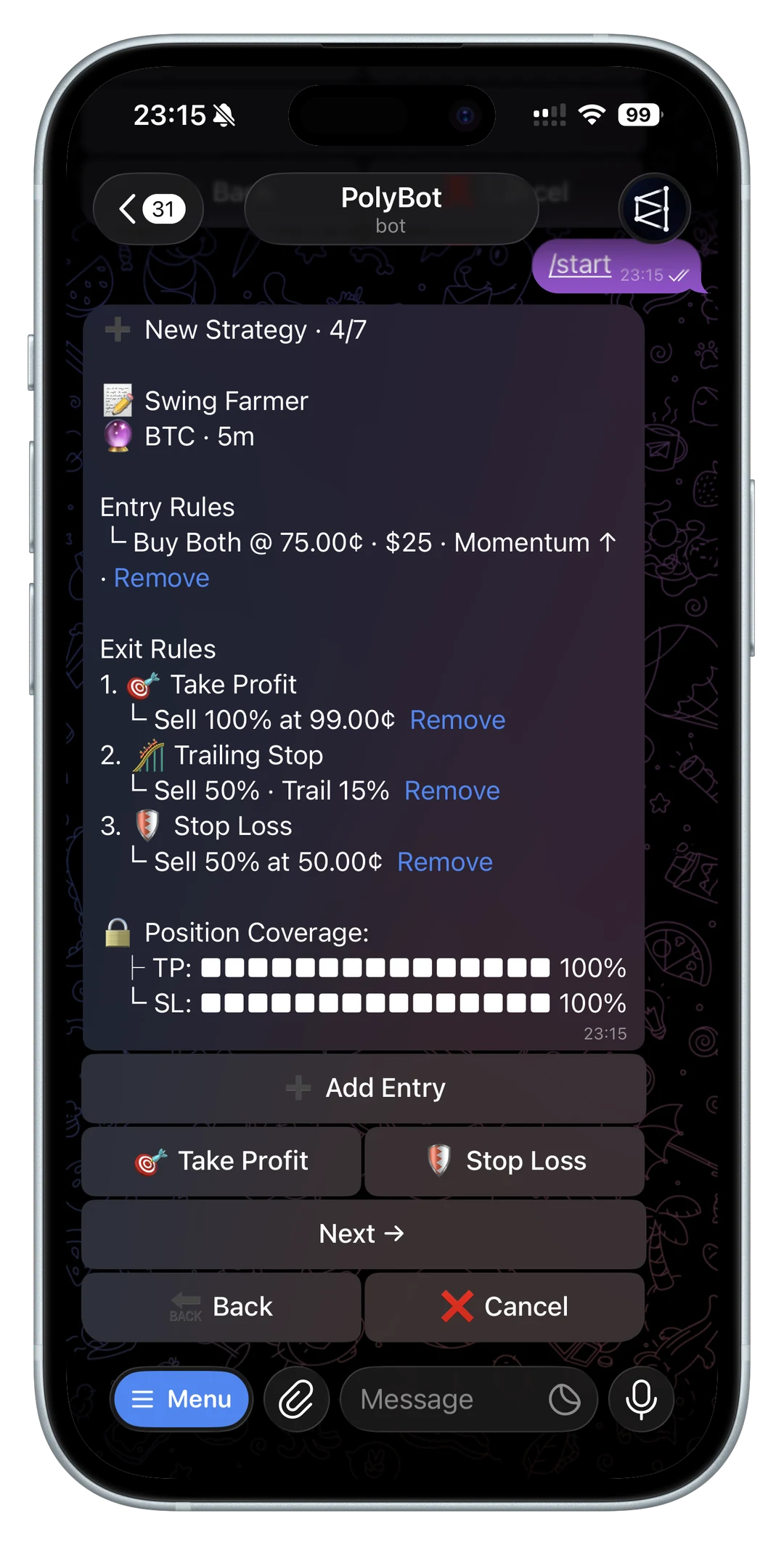
Polymarket trade history is easy to underestimate until you need to explain a balance, a PnL change, a copied trade, or a resolved market.
A trading record is not just a list of buys. It should help you connect entries, sells, open positions, redemptions, rewards, rebates, and unresolved exposure. If you only look at the last trade or a headline profit number, you can miss the state that actually matters.
Polymarket's public documentation exposes several useful record types: current positions, trades, user activity, and an accounting snapshot ZIP that contains CSV files. PolyBot's official Portfolio & Orders Guide adds the Telegram side of the workflow: open positions, PnL, selling, redeeming, PnL cards, and orders. If the record starts from a shared profit image, use the Polymarket PnL card guide to separate screenshots from durable accounting records.
This guide explains how to think about Polymarket trade history from a trader's point of view. It is not tax advice or accounting advice. Use it as a practical checklist before you rely on a number, copy a wallet, or assume funds are missing.
If you are starting from current account state rather than historical exports, read the Polymarket portfolio tracker bot guide before using CSV records to explain positions, PnL, open orders, and redeems. If the missing context is an unfilled or cancelled order, use the Polymarket open orders and cancel orders guide.
If you are reviewing a ranked trader rather than your own account, start with the Polymarket leaderboard guide, then use activity history to explain the ranking.
If you are starting from a raw address or profile link, the Polymarket wallet lookup guide explains how to connect profile context, open positions, closed positions, and activity before reviewing exports.
Trade history is not the same as portfolio state
Trade history answers what happened.
Portfolio state answers what is true now.
Those are related, but different. A historical buy may still be open, partially sold, fully sold, resolved, redeemed, merged, split, or hidden from an active view after cleanup. A current position may be the result of many historical actions.
Separate these records:
- trade history: buys and sells
- user activity: trades, redeems, rewards, rebates, splits, merges, conversions, and other activity types
- current positions: open or redeemable exposure
- closed positions: completed markets or exited exposure
- accounting snapshot: CSV-style export of position and equity records
- Telegram portfolio view: practical controls for selling, redeeming, clearing, and canceling orders
If one number looks wrong, do not jump directly to a conclusion. First ask which record type you are reading.
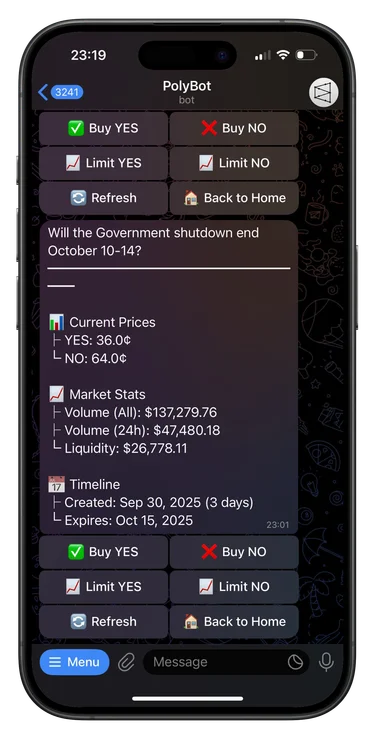
Start with the question you are trying to answer
Different questions need different evidence.
Use trade history when you want to know:
- what price you bought or sold at
- how many shares changed hands
- which market and outcome were involved
- when the trade happened
- whether the side was BUY or SELL
- which transaction hash belongs to the action
Use position data when you want to know:
- current size
- average price
- current value
- unrealized PnL
- realized PnL fields, when available
- redeemable or mergeable status
- whether the position is still active
Use activity history when you need the broader story around trades, redemptions, rewards, rebates, and other non-trade events.
Use the accounting snapshot when you need a file-based export to reconcile positions and equity outside the live interface.
What the Polymarket accounting snapshot is for
Polymarket documents an accounting snapshot endpoint at data-api.polymarket.com/v1/accounting/snapshot. It takes a user wallet address and returns a ZIP file containing positions.csv and equity.csv.
That makes the snapshot useful when you want a portable record rather than only a live screen.
Use an accounting snapshot to:
- keep an offline reference point
- compare positions and equity across time
- reconcile a portfolio review after many trades
- support personal recordkeeping
- investigate whether a balance change is tied to open exposure or resolved positions
Do not treat one snapshot as a full explanation by itself. A snapshot is a point-in-time record. If you trade actively, copy wallets, or use automated exits, you still need activity history and portfolio review around it.
Trades explain fills, not the whole account
Polymarket's trade endpoint returns trade records with fields such as wallet, side, asset, condition ID, size, price, timestamp, market title, outcome, and transaction hash.
That is useful for reconstructing fills:
- what you bought or sold
- which side of the market changed
- what price was used
- how much size filled
- when it happened
- which transaction hash can be checked later
But trades alone can miss non-trade events. A winning market may later be redeemed. A position may be affected by split or merge activity. Rewards or rebates may appear outside the simple buy/sell view. A deposit or withdrawal belongs to a broader wallet record, not just the market trade list.
For execution-specific problems, use the Polymarket order failed guide and the Polymarket order types guide alongside trade history.
Activity history gives the broader timeline
Polymarket's user activity documentation describes a public activity endpoint with event types such as TRADE, SPLIT, MERGE, REDEEM, REWARD, CONVERSION, MAKER_REBATE, and REFERRAL_REWARD.
That broader activity timeline is useful when PnL or balance changes do not match a simple trade list.
Check activity history when:
- a resolved winner was redeemed
- a market was split or merged
- a maker rebate or reward affected totals
- a conversion changed the record
- a transaction hash needs to be matched to an action
- a copied trade needs to be compared with source-wallet activity
Activity is the bridge between "I remember placing a trade" and "what actually happened to this wallet."
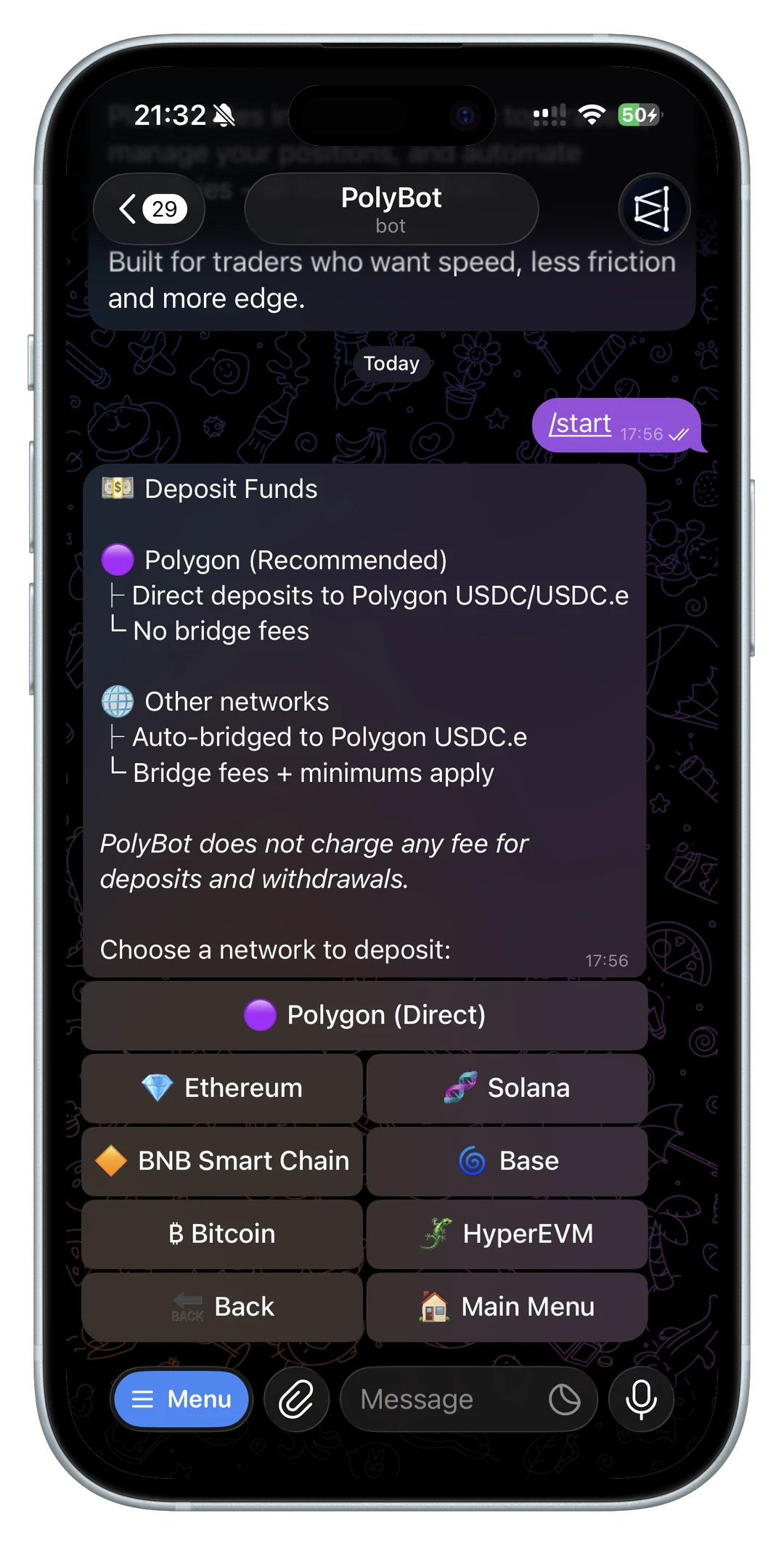
Current positions explain open exposure
Trade history is backward-looking. Current positions show what remains.
Polymarket's current positions documentation includes fields such as size, average price, initial value, current value, cash PnL, percent PnL, realized PnL, current price, redeemable status, and market metadata.
Those fields help answer:
- do I still hold shares?
- what is the average entry price?
- is the position open or redeemable?
- how much is the position worth at current price?
- how much PnL is still mark-to-market?
- is this market part of a negative-risk or multi-outcome structure?
For the difference between realized and unrealized numbers, read the Polymarket PnL tracker guide. That distinction prevents many trade-history mistakes.
Redeems belong in the record
A Polymarket market can resolve after you stop actively trading it. If your outcome wins, the position usually needs to be redeemed before the value is fully back in usable balance.
A trade-history review should mark:
- market resolved
- outcome won or lost
- redeemable position appeared
- manual redeem or auto-claim queued
- payout returned to balance
- losing position cleared from the active view
If you only track buys and sells, you can miss settlement cleanup. The auto-claim and redeem winnings guide explains how manual redeem, Claim all, pending redemption, and auto-claim fit together.
For the market-resolution state behind that cleanup, read the Polymarket resolution rules guide.
Open orders can make history look incomplete
Open orders are not completed trade history yet, but they can still affect available balance and risk.
An order can:
- reserve balance
- partially fill
- remain open after your thesis changes
- get canceled before it fills
- create exposure later if you forget it exists
That is why trade history should be reviewed with the orders hub, not instead of it. A past order may have no fill, a partial fill, or an unfilled remainder. The portfolio and orders guide explains how open limit orders, active stop losses, PnL, and redeems belong in the same review routine.
Copy trading needs source and follower records
Copied trades create two histories:
- the source wallet's original history
- your follower wallet's copied history
Those histories can diverge. Your copy may fill later, fill at a worse price, skip because of slippage, hit a daily cap, use a different size, or exclude a market category.
When reviewing copied-trade history, compare:
- source trade timestamp
- follower trade timestamp
- source price
- follower fill price
- source size
- follower size
- skipped trades
- copied exits or missing exits
- resulting PnL on both sides
The wallet analyzer guide helps evaluate the source wallet. The copy trading settings guide explains the filters that can make follower history differ from leader history.
If the recordkeeping question is tied to getting funds out, read the Polymarket cash-out guide before mixing sells, redeems, withdrawals, and open-order reserves in one spreadsheet row.
CSV exports need consistent labels
If you keep your own spreadsheet or accounting file, use consistent labels.
At minimum, track:
- timestamp
- market title
- condition ID or market slug
- outcome
- side
- size
- price
- USDC amount
- transaction hash
- activity type
- open, closed, redeemable, redeemed, or cleared state
- notes about copy source, strategy, or manual trade reason
Avoid mixing open-position value with realized results in the same column. It is better to have separate columns for realized PnL, unrealized PnL, current value, and settlement state than to compress everything into one vague "profit" field.
A practical review workflow
When a trade-history question comes up, work in this order:
- Check the current portfolio: open positions, current value, PnL, and redeemable status.
- Check open orders: unfilled or partially filled orders can reserve balance.
- Check trades: buy/sell fills, side, size, price, timestamp, and transaction hash.
- Check activity: redeems, rewards, rebates, conversions, splits, and merges.
- Check the accounting snapshot if you need a CSV-style point-in-time export.
- Compare copied wallets separately from your follower wallet.
- Write down what changed before changing size or turning on another strategy.
For Telegram workflow recovery, the commands guide explains how to reach portfolio, orders, settings, and trading tools without scrolling through old messages.
When trade history looks wrong
Most trade-history confusion starts with a reasonable observation: "My balance or PnL does not match what I expected."
Before assuming the record is wrong, check:
- Is the position still open?
- Is there an open limit order reserving balance?
- Did the market resolve?
- Was a winning position redeemed?
- Was a losing position cleared?
- Did a reward, rebate, split, merge, or conversion appear in activity?
- Did a copied trade skip or fill at a different price?
- Did you compare a current-value number with a realized-result number?
If the issue is withdrawable balance, read the Polymarket Telegram bot withdrawal guide. If a withdrawal failed or stayed pending, use the Polymarket withdrawal troubleshooting guide. If the issue is performance math, start with the PnL tracker guide.
The bottom line
A clean Polymarket trade-history workflow connects four things: fills, activity, positions, and settlement.
Trades show buys and sells. Activity explains events around those trades. Positions show what remains open or redeemable. Accounting snapshots provide CSV-style records for external review. Telegram portfolio tools help you act on that information through sells, cancels, redeems, and order review.
Do not rely on one number or one screen. For serious review, keep trade history, current positions, open orders, redemptions, and copied-wallet context together.
Not tax advice, legal advice, or investment advice. Prediction markets can lose money, and any tax, accounting, or regulatory question should be reviewed with a qualified professional and current official records.
Polymarket Leaderboard Guide: PnL, Volume, Wallet Rankings, and Copy Trading Risk
How to read a Polymarket leaderboard before copy trading: PnL, volume, time windows, category rankings, wallet activity, liquidity, and when top traders are not copyable.
Wallet Analysis / 10 min
Polymarket PnL Card Guide: Share Profit and Loss From Telegram Without Misreading the Trade
How to use Polymarket PnL cards from a Telegram bot: what a profit card can show, what it cannot prove, and how to pair shareable screenshots with portfolio, PnL, orders, and trade history checks.
Wallet Analysis / 9 min