Polymarket Copy Trading Bankroll and Drawdown Guide
How to size a Polymarket copy trading setup around bankroll, drawdown, liquidity, daily caps, per-trade limits, follower gap, and when to scale or pause a copied wallet.

PolyBot Team
Updated June 1, 2026
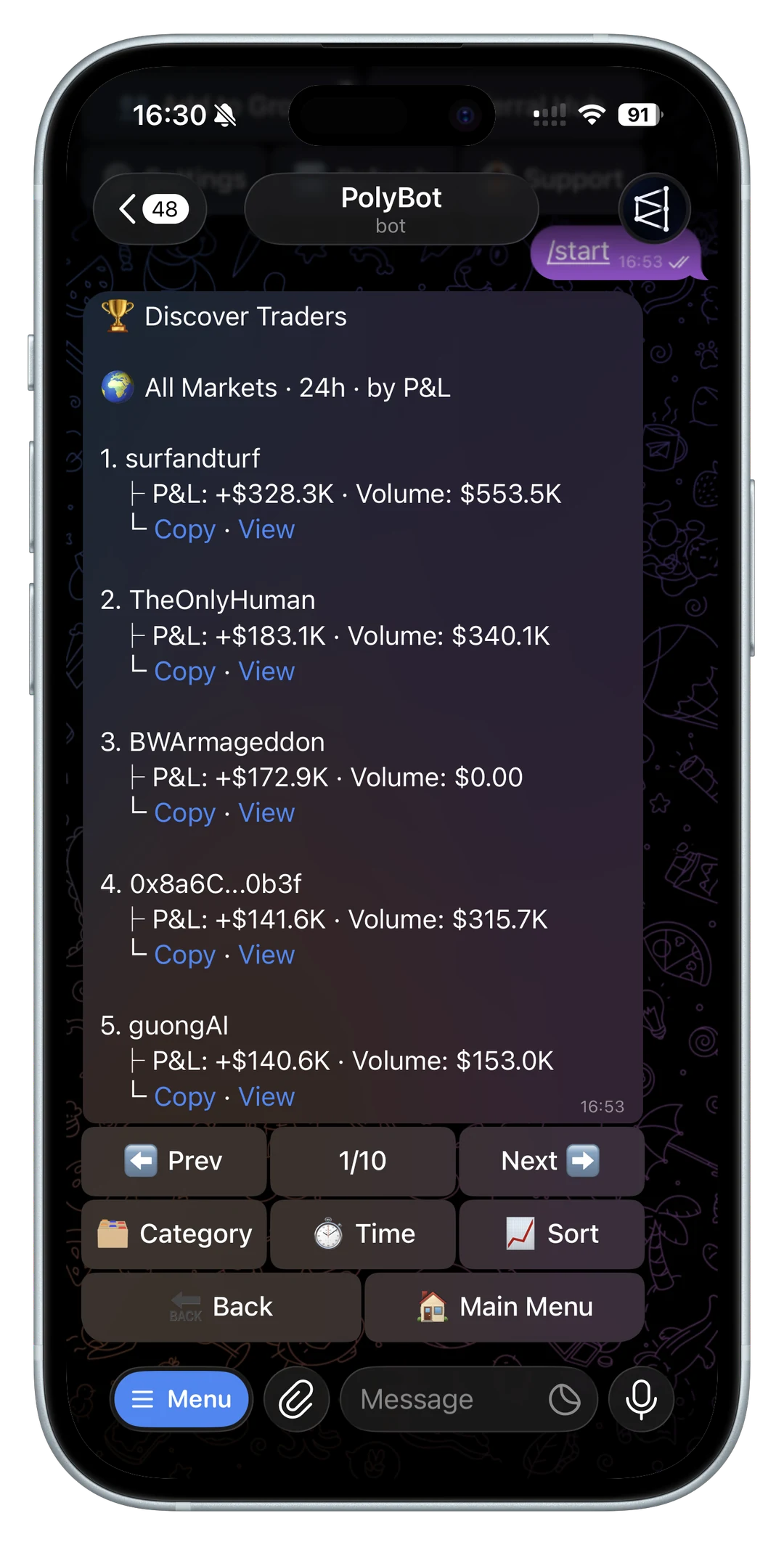
The easiest way to ruin a decent copy-trading setup is to size it like the leader.
A Polymarket wallet can be profitable and still be wrong for your bankroll. The trader may have more capital, better fill quality, more patience through drawdowns, or a strategy that only works when every related market is copied. If you copy the wallet with too little capital, too much capital, or no drawdown plan, the copied result can drift away from the source wallet quickly.
PolyBot's official Copy Trading Guide recommends starting small, setting daily caps, and using filters to manage exposure. This guide turns that into a practical bankroll and drawdown framework for Polymarket copy trading.
For manual and hybrid workflows, pair this with the Polymarket position sizing guide, which covers per-trade risk, quick-buy defaults, and total exposure before you scale.
Use it with the Polymarket leaderboard guide, the best Polymarket traders to copy guide, the Polymarket copy trading settings guide, and the wallet analyzer before you scale a copied trader.
Bankroll is not just total balance
Your copy-trading bankroll is the amount you are willing to allocate to copied trades under a specific set of rules.
It is not necessarily your full PolyBot balance. It is not the amount the leader trades. It is not the largest single trade you can technically place.
For each copied wallet, separate:
- total available balance
- maximum allocation to that leader
- maximum daily copied volume
- maximum per-trade amount
- maximum exposure to one market
- maximum drawdown you will tolerate before pausing
This matters because copy trading can produce multiple positions before you review them. A leader may enter three markets, average into a fourth, sell half of another, and then trade again while you are offline. Your bankroll plan should survive that activity without depending on constant manual attention.
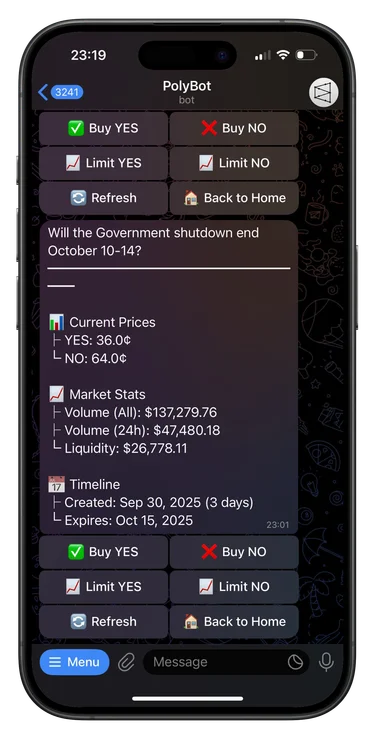
Start with a leader allocation
Before choosing fixed or proportional sizing, decide how much of your bankroll one leader deserves.
A new leader should usually get a small allocation until you have copied performance data. Even if the source wallet looks strong, you still need to learn how it behaves after your settings, liquidity, slippage, fees, and timing.
Useful starting questions:
- What amount can I lose without changing my behavior?
- How many copied trades does this leader usually make per day?
- What is the leader's average and largest trade size?
- Does this leader average into the same outcome?
- Does the strategy require copying many related markets?
- How much drawdown would make me pause and review?
The answer should become a number, not a feeling. For example: "This wallet gets a $300 test allocation, a $40 daily cap, a $10 max copied trade, and a pause review after a $60 drawdown."
When you measure that allocation, separate realized losses from open-position mark-to-market changes. The Polymarket PnL tracker guide explains why those numbers should not be mixed casually.
Fixed sizing is the normal test mode
Fixed sizing is usually the cleanest way to test a copied wallet.
With fixed sizing, every copied buy uses the same amount. If the leader buys $50, $500, or $5,000, your copied trade still uses your configured amount.
Fixed sizing works well when:
- you are testing the leader
- the leader has a much larger bankroll
- you do not know whether large leader trades outperform small ones
- you want predictable daily exposure
- you are still learning the skip reasons and fill quality
The tradeoff is that fixed sizing may ignore useful conviction. If the leader's large trades are much better than their small trades, fixed sizing can underweight the best signal.
That is acceptable during testing. Your first job is to learn whether the wallet is copyable at all.
Proportional sizing requires stronger evidence
Proportional sizing copies a fraction or multiplier of the leader's size. It can preserve the leader's conviction, but it can also import risk that does not fit your account.
Use proportional sizing only when you understand:
- the leader's normal trade-size distribution
- whether larger trades have historically performed better
- how often the leader places unusually large bets
- whether your max-per-trade cap is low enough
- whether your daily cap prevents runaway exposure
Example: a 0.10x multiplier turns a leader's $400 buy into your $40 buy. That may be reasonable. But if the same leader occasionally buys $5,000, the copied trade becomes $500 unless a max-per-trade cap stops it.
Proportional sizing without caps is not a bankroll plan. It is borrowed risk.
Daily cap is the drawdown governor
The daily cap is one of the most important copy-trading controls because it limits how much a subscription can spend in a day.
It protects you from high-volume days, repeated scale-ins, and leaders who suddenly trade more aggressively than usual.
Set the daily cap around the amount of exposure you are comfortable adding before the next review window. If you check the bot once per day, the daily cap should be low enough that one busy day cannot ruin the test. If you check every few hours, you may tolerate a higher cap, but only if you actually review activity.
Signs your daily cap is too high:
- one leader can use most of your tradable balance
- you feel forced to watch every notification
- multiple copied positions open before you understand the first one
- a bad day makes you want to turn off the whole setup
Signs your daily cap is too low:
- the best trades are skipped before normal activity completes
- you cannot copy enough samples to evaluate the wallet
- the cap is hit by one ordinary copied trade
The right cap is not the highest amount you can afford. It is the amount that lets the strategy run while keeping review possible.
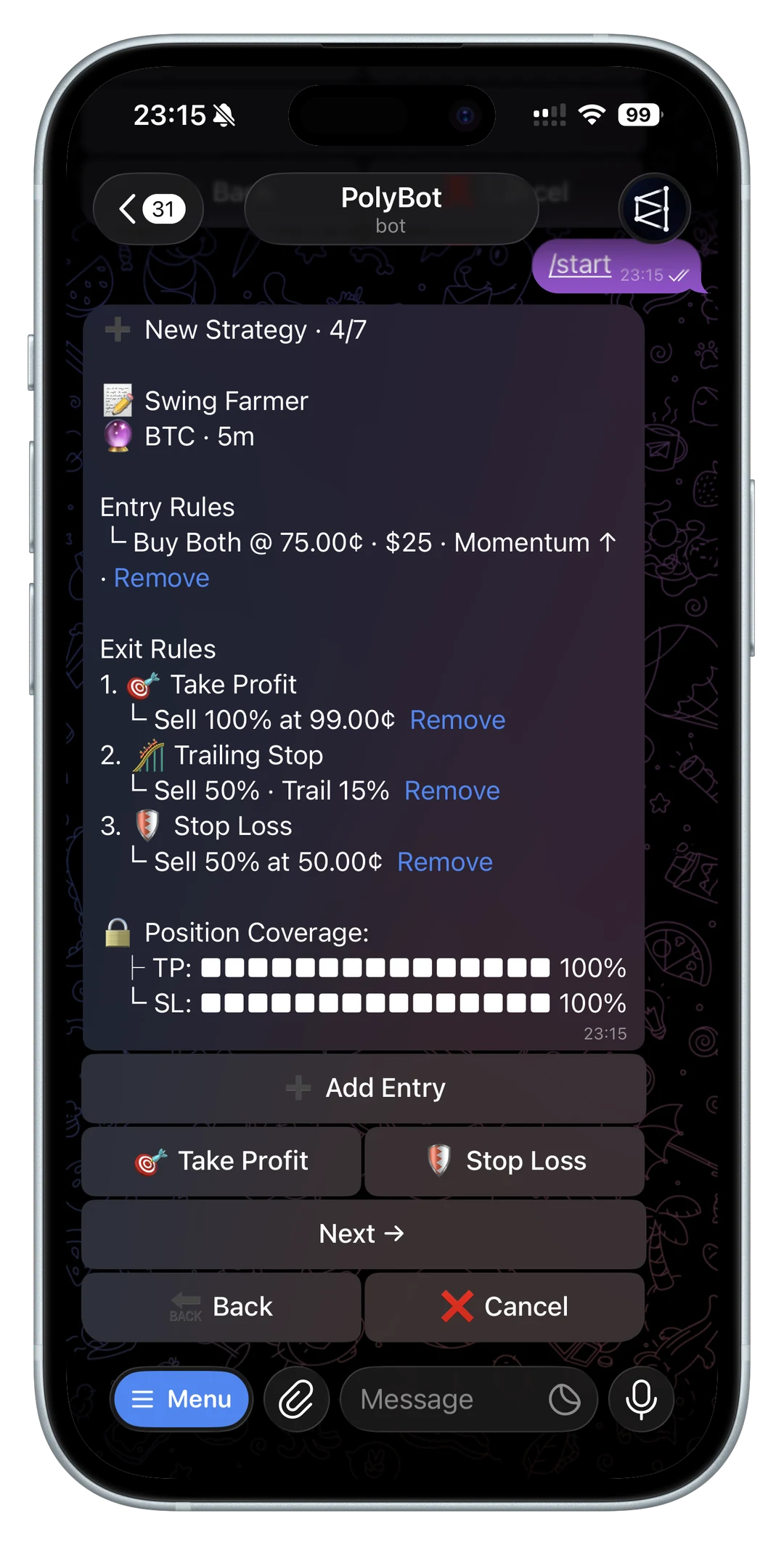
Drawdown should have a pause rule
Drawdown is the decline from a recent high point in the copied setup.
Do not wait until a drawdown feels bad. Define the review rule before the subscription starts.
Examples:
- pause after a 20% loss on the leader allocation
- pause after three copied losses in one day
- pause if copied PnL is worse than leader PnL by more than a set amount
- pause if slippage exceeds the planned range repeatedly
- pause if the leader starts trading outside the category you wanted
The pause does not have to mean the leader is bad. It means the copied setup needs review.
Review whether the problem came from:
- source-wallet performance
- copy execution
- slippage
- market liquidity
- category drift
- overexposure to one outcome
- stale or missing exit rules
This is why pause is better than panic-cancel. A pause preserves the configuration while giving you time to decide.
Market liquidity limits how large you can copy
Position size has to respect the market, not only your balance.
A copied trade can be too large for a thin order book even if your bankroll can afford it. If your copy order moves the price meaningfully, you may fill at a worse level than the leader and change the trade's expected value.
Liquidity-sensitive sizing questions:
- How much size is available near the leader's fill price?
- Is the spread wide?
- Does the leader usually trade before the market moves?
- Are many followers likely to copy the same wallet?
- Would my copied order push the price outside my acceptable range?
If the answer is uncertain, reduce size first. A smaller copied trade that fills close to the leader can be better than a larger trade that chases the book.
For the execution side, read why execution speed matters in prediction market copy trading.
The follower gap is the real scaling test
The follower gap is the difference between the leader's result and your copied result.
It can come from:
- later entry price
- skipped trades
- partial fills
- higher slippage
- different sell percentage
- missing the leader's scale-ins
- copy size that is too large for the market
If skipped trades are the main gap, read the Polymarket copy trading skipped trades guide before raising bankroll, loosening slippage, or changing caps.
Before scaling, compare the copied account to the leader. If the leader is up but your copied setup is flat or down, do not increase size just because the wallet looks good. The problem may be that the wallet is not copyable under your settings.
Good scaling evidence looks like:
- copied entries are close to leader entries
- skips are understood and acceptable
- copied PnL direction roughly matches leader PnL
- slippage does not erase the expected edge
- drawdowns stay within the planned range
- no single market dominates exposure
If the follower gap is too large at $10 per copy, it will usually get worse at $100 per copy.
Per-market exposure prevents hidden concentration
Copy trading can concentrate risk even when each individual trade looks small.
This happens when:
- one leader averages into the same outcome repeatedly
- several leaders buy the same market
- multiple subscriptions track the same trader with different settings
- long-dated markets accumulate in the portfolio
- sells are skipped or do not match your position size
Per-market and per-outcome caps prevent a small subscription from becoming one large hidden bet.
Review open positions by market, not only by leader. If three leaders are all buying the same outcome, your true exposure is the combined amount.
The portfolio and orders guide is the companion workflow for this review.
Minimum viable bankroll depends on the strategy
There is no universal minimum bankroll for copying a Polymarket wallet. The right amount depends on the trader's style.
Different styles need different capital:
- single high-conviction entries can be tested with small fixed sizes
- fast-news wallets need enough size to matter but strict slippage
- full-basket strategies need enough budget to copy the structure
- long-duration specialists need patience and unused balance
- high-volume traders need low fixed size and strict daily caps
If a leader's edge depends on copying every leg of a related set of positions, a tiny bankroll may break the strategy. You might copy only part of the basket and end up with exposure the leader never intended.
In that case, either lower the fixed size so you can copy the full structure, use a larger test allocation, or skip the leader.
When to scale a copied wallet
Scale only after the copied setup proves it can behave.
Before increasing size, check:
- enough copied trades have run to evaluate behavior
- the copied account's fills are close enough to the leader
- drawdown stayed inside your planned limit
- skipped trades make sense
- the leader is still trading the category you wanted
- per-market exposure stayed controlled
- you can explain why the setup worked
Increase one variable at a time. Do not raise fixed size, loosen slippage, widen categories, and increase daily cap together. If performance changes, you will not know which change caused it.
A simple scaling ladder:
- Test with very small fixed size.
- Confirm fills, skips, and drawdown.
- Raise the daily cap slightly.
- Raise fixed size or switch to limited proportional sizing.
- Add categories only after the original category still works.
- Keep a pause rule active.
This is slower than chasing a leaderboard, but it produces cleaner evidence.
When to pause or reduce size
Reduce or pause before a small problem becomes a bankroll problem.
Pause when:
- the leader changes categories abruptly
- copied fills are consistently worse than source fills
- daily cap is hit too often
- one market dominates exposure
- drawdown crosses your rule
- the leader starts trading much larger or much smaller than usual
- you cannot explain recent copied performance
Do not treat pausing as failure. It is how you keep optionality.
The copy trading settings guide covers the controls to adjust after a pause: sizing mode, daily cap, slippage, price range, trade limits, per-outcome limits, and category filters.
A conservative bankroll template
For a new copied wallet, a conservative template might look like this:
- one leader at a time
- one category or market type
- fixed sizing only
- small max copied trade
- low daily cap
- strict per-market exposure cap
- moderate or tight slippage
- pause after a defined drawdown
- weekly review before scaling
This template will skip some opportunities. That is the point. Early copy trading should protect learning capital while you discover whether the wallet is actually copyable.
Bankroll and drawdown FAQ
How much money do I need to copy trade on Polymarket?
There is no universal amount. The right bankroll depends on the leader's trade frequency, average size, market liquidity, and whether the strategy requires copying many related positions. Start with a small allocation and fixed sizing before scaling.
Should I copy the same percentage as the leader?
Not at first. Proportional sizing can preserve conviction, but it can also import a leader's risk profile. Test with fixed sizing, then consider proportional sizing only after you understand the leader's size distribution and have max-per-trade and daily caps.
What drawdown should make me pause?
Use a rule you can follow before emotions take over. Examples include a set percentage of the leader allocation, repeated poor fills, copied PnL diverging sharply from leader PnL, or one market becoming too large. The exact number depends on your bankroll and risk tolerance.
Why did the leader profit while my copied setup lost money?
Common causes include worse entry prices, skipped winning trades, copied size that was too large for liquidity, different sell behavior, category drift, or fees and slippage erasing the edge. Review the follower gap before increasing size.
Copy smaller until the evidence says otherwise
Copy trading works best when bankroll, settings, and review discipline are designed together.
Pick a leader allocation, cap daily exposure, size around liquidity, define drawdown rules, and compare your copied results against the source wallet before scaling. The goal is not to copy more. The goal is to copy only what your bankroll can survive and your process can understand.
Not investment advice. Copy trading can lose money, and past wallet performance does not guarantee future results. Verify current product behavior in official docs before funding, copying, or increasing size.
Polymarket Copy Trading: How It Works and How to Start From Telegram
Learn how Polymarket copy trading works, how to choose wallets, configure filters, control slippage, size positions, and manage risk from Telegram with PolyBot.
Copy Trading / 13 min
Best Polymarket Traders to Copy: How to Find Wallets With Real Edge
How to find and evaluate the best Polymarket traders to copy: leaderboard filters, wallet PnL, win rate, sizing behavior, category edge, liquidity, copyability, and risk controls.
Copy Trading / 10 min